
Flowers
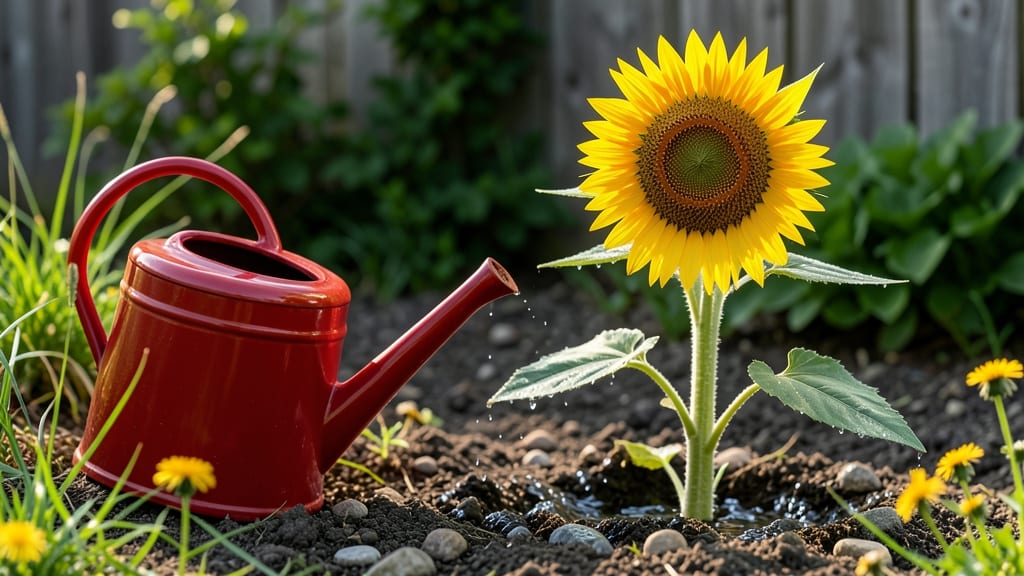
Do sunflowers need a lot of water? The answer is yes—especially when they’re young—but their deep roots mean they’re tougher than you think once they’re established.
Picture this: you’ve just planted your 🌻 sunflowers in April, and every morning you’re out there with the hose, thinking they’ll wilt if you skip a day.
But here’s the twist—those roots? They can dive 6 feet deep for moisture, turning your sunflowers into drought survivors once they’re a few weeks old.
That doesn’t mean you can ignore them entirely. Seedlings need consistent moisture to avoid wilting, while mature plants can handle dry spells better than most garden stars.
The key is understanding when to water deeply and when to let the soil dry out slightly—without letting your giants turn into sad, droopy sticks.
In this guide, I’ll break down exactly how much water sunflowers need at every stage, from sprouting to July blooms, plus the signs you’re over- or underwatering. You’ll walk away knowing how to keep your sunflowers thriving without wasting a drop.


How much water sunflowers actually need (with root depth secrets)
Sunflowers might look like they need constant hydration, but their deep taproots (up to 6 feet) tell a different story. These roots let them access water deep underground, making them more drought-tolerant than you’d expect. However, young plants and flowering stages still need consistent moisture to thrive.
Think of sunflowers like desert survivors with a secret weapon—their roots. While they don’t need daily watering like lettuce, they crave deep, infrequent soaks to encourage strong root growth. Overwatering can actually stress your plants by suffocating roots or inviting fungal diseases.
| Growth Stage | Water Needs | Frequency | Depth |
|---|---|---|---|
| Seedlings (0-2 weeks) | High moisture | Every 2-3 days | Top 1-2 inches |
| Vegetative (2-6 weeks) | Moderate | Every 3-5 days | 6 inches deep |
| Flowering (6-12 weeks) | Consistent | Every 5-7 days | 12+ inches |
| Mature (Post-flowering) | Low | Every 10-14 days | Deep soak |
During the seedling stage, keep soil evenly moist but not soggy. Use a spray bottle or gentle watering can to avoid disturbing delicate sprouts. Once plants hit 3-4 inches tall, switch to deep watering to encourage root growth downward.
When sunflowers enter the flowering stage, they need steady moisture to support those heavy seed heads. This is when their 6-foot roots shine—water deeply every 5-7 days to let them access stored moisture. Skimping here can lead to drooping blooms or poor seed development.
Mature sunflowers are drought-tolerant champions. Once they’ve finished flowering, reduce watering to every 10-14 days unless your area experiences extreme heat. Their deep roots will handle the rest, and you’ll avoid wasted water or root rot.
Soil type plays a huge role in watering needs. Clay soil holds moisture longer, while sandy soil drains quickly. Test your soil by digging 6 inches deep—if it’s dry, water more frequently.
If it’s still damp, wait a few days. Mulch with straw or wood chips to retain moisture and regulate soil temperature.
Morning watering is non-negotiable for sunflowers. Watering in the early hours (before 10 AM) gives leaves time to dry completely, reducing fungal risks like powdery mildew. Avoid evening watering, as damp foliage overnight invites pests and diseases.
Pro tip: Use a moisture meter or the finger test to check soil moisture. Stick your finger 2 inches deep—if it feels dry, it’s time to water. For container-grown sunflowers, water when the top inch of soil is dry, as pots dry out faster.
Remember, sunflowers are not water hogs—they’re smart survivors. By matching your watering to their growth stages and root depth, you’ll grow taller, healthier blooms with minimal effort. Now go enjoy those golden giants without the guilt of overwatering! 🌻
Signs your sunflowers are overwatered or underwatered (and how to fix it)
Sunflowers may seem like thirsty giants, but their deep taproots (up to 6 feet) mean they can actually handle less frequent watering than you’d expect.
The key is consistent moisture without drowning them. Overwatering or underwatering both show up in visible stress signs—here’s how to spot them and act fast.
First, check your soil moisture before watering. Stick your finger 2-3 inches deep—if it’s damp, wait. If it’s bone-dry, it’s time to water. Young seedlings need daily checks, while mature plants can go 5-7 days between deep waterings. Ignoring these cues often leads to root rot or stunted growth.
⚠️ callout warning
💧 Sunflower Watering Myth
Sunflowers do NOT need daily watering—even as seedlings! Overwatering causes yellow leaves and root suffocation. Deep, infrequent watering (1-2 times weekly) trains roots to grow deeper for drought resistance.
Yellowing leaves are the #1 sign of overwatering. Start with the older leaves near the base, turning soggy yellow or brown. This happens when roots suffocate from too much moisture. Mold or mildew on soil or stems?
That’s a red flag—stop watering immediately and let the soil dry out. For underwatered sunflowers, leaves may also yellow but feel crispy or papery to the touch.
Drooping or wilting stems are another clue—but don’t jump to conclusions. Check the time of day: sunflowers naturally droop in afternoon heat but perk up at night. If they stay wilted, it’s either underwatering or overwatering.
Gently tug the plant: if it pulls out easily, roots are rotting from overwatering. If soil is dry and hard, it’s thirsty!
Fix overwatered sunflowers by improving drainage. Mix compost or perlite into heavy soil, and water only when the top 2 inches are dry. For underwatered plants, deep watering (1-2 gallons per plant) in the morning helps.
Mulch with straw or wood chips to retain moisture and prevent soil crusting, which blocks water absorption.
Climate matters! In hot, dry zones (like the Southwest), sunflowers thrive with weekly deep waterings. In humid or rainy areas, cut back to every 10 days to avoid fungal diseases.
Always water at the base of the plant, not the leaves, to prevent powdery mildew—a common sunflower enemy.
Pro tip: Group sunflowers with companion plants like beans or marigolds to improve soil health naturally. These plants help regulate moisture and deter pests, making your watering job easier. With the right balance, your sunflowers will reward you with bold blooms and towering height—no guesswork needed!