Watering
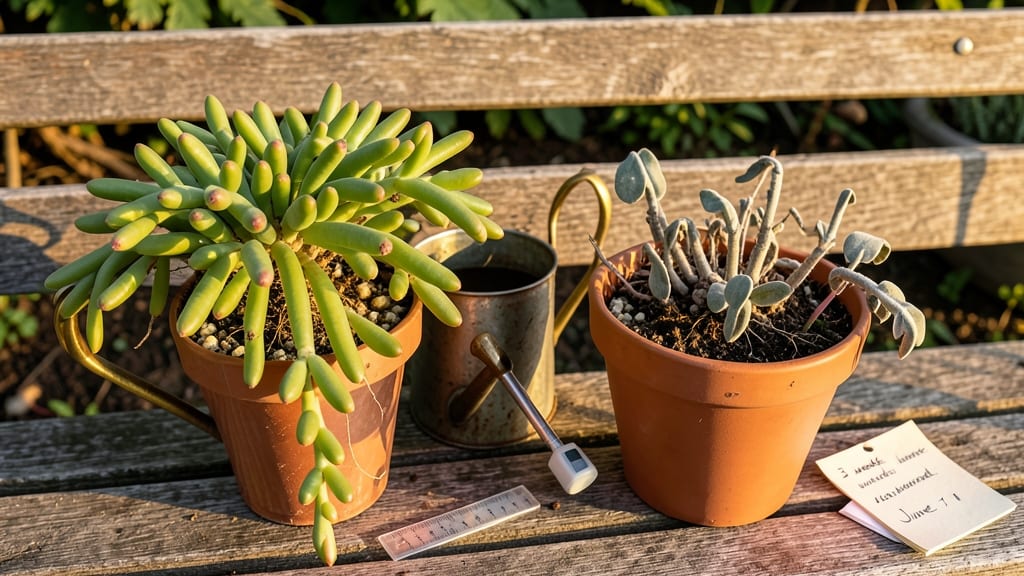
How long plants can survive without water varies dramatically by type—succulents like cacti may endure weeks, while tropical plants typically wilt within days. Always check soil moisture and leaf condition before deciding when to water.
This difference comes down to how each plant stores and uses water. Succulents store moisture in their leaves and stems, while tropical plants rely on frequent hydration to maintain their lush growth. 🌵 Even within categories, factors like pot size, soil type, and temperature play huge roles—container plants dry out faster than in-ground ones.
I've learned that sticking my finger 1-2 inches into the soil is the most reliable way to check moisture levels before watering.
Seasonal shifts also change the equation. In summer, plants lose moisture faster due to heat and wind, while winter dormancy lets many survive longer stretches without water. Indoor plants near heating vents or air conditioners need more frequent watering than those in stable environments.
The key is observing your plants' behavior—drooping leaves or crispy edges are clear signals it's time to hydrate.
💡 In This Article
- Plant Water Needs by Species: Drought-Tolerant vs. Water-Dependent Types
- Seasonal Watering Adjustments for Indoor and Outdoor Gardens
Plant water needs by species: drought-tolerant vs. water-dependent types
At the core of a plant's water survival ability lies its root system and moisture storage capacity. Succulents like aloe vera or jade plants have specialized cells called parenchyma that store water in their thick leaves and stems, allowing them to go 2-4 weeks without water in ideal conditions.
Their roots spread wide but shallow to absorb any available moisture quickly. In contrast, tropical plants like ferns or philodendrons have shallow, fibrous roots designed for frequent hydration and minimal storage capacity, which is why they typically show wilting signs within 3-7 days of dry soil.
Temperature and humidity play critical roles in these survival times. A cactus in a 75°F desert environment with low humidity might survive 30+ days without water, while the same cactus in a 90°F greenhouse with high humidity could wilt in just 10-14 days.
The key difference is evaporation rates—dry air pulls moisture from plant tissues faster, accelerating dehydration. I've noticed that even drought-tolerant plants like lavender can struggle in overly humid conditions, as their waxy leaves become less effective at moisture retention.
Leaf structure also reveals a plant's water needs. Succulents have thick, waxy leaves that reduce water loss through transpiration, while tropical plants often feature broad, thin leaves that maximize photosynthesis but require constant moisture.
For example, a snake plant's upright leaves store water in their thick bases, allowing it to survive 4-6 weeks without water, whereas a peace lily's delicate leaves wilt dramatically within 2-3 days of dryness. This structural difference explains why some plants thrive in neglect while others demand consistent care.
Soil type affects survival times dramatically. Plants in sandy, well-draining soil dry out faster than those in clay or loamy soil, which retain moisture longer.
A potted cactus in sandy mix might need water every 2-3 weeks, while the same plant in a moisture-retentive potting mix could go 4-6 weeks between waterings. The soil's water-holding capacity creates a buffer that extends survival times, especially for drought-tolerant species.
I always recommend using a mix designed for the specific plant type to optimize these natural adaptations.
Light exposure creates another critical variable. Plants in bright, direct sunlight lose moisture faster through transpiration than those in shaded conditions. A desert rose in full sun might survive 3 weeks without water, while the same plant in partial shade could last 5-6 weeks.
This is why many drought-tolerant plants naturally grow in shaded canyons or under other vegetation in their native habitats. Understanding these light-water interactions helps explain why some plants appear more resilient in certain environments than others.
Consider these key survival ranges by plant category:
- Succulents/Cacti: 2-8 weeks (depending on species, pot size, and conditions)
- Drought-Tolerant Perennials: 3-6 weeks (lavender, rosemary, yucca)
- Houseplants (moderate needs): 1-3 weeks (snake plant, zz plant, pothos)
- Tropical Plants: 2-7 days (ferns, peace lilies, calatheas)
- Vegetables/Herbs: 1-2 weeks (basil wilts in 3-5 days, kale lasts 10-14 days)
What most gardeners don't realize is that these timeframes represent ideal conditions. Stress factors like extreme temperatures, pests, or poor soil quality can cut survival times by half or more. Always observe your plants' specific responses rather than relying solely on general guidelines. 🌱