
How To
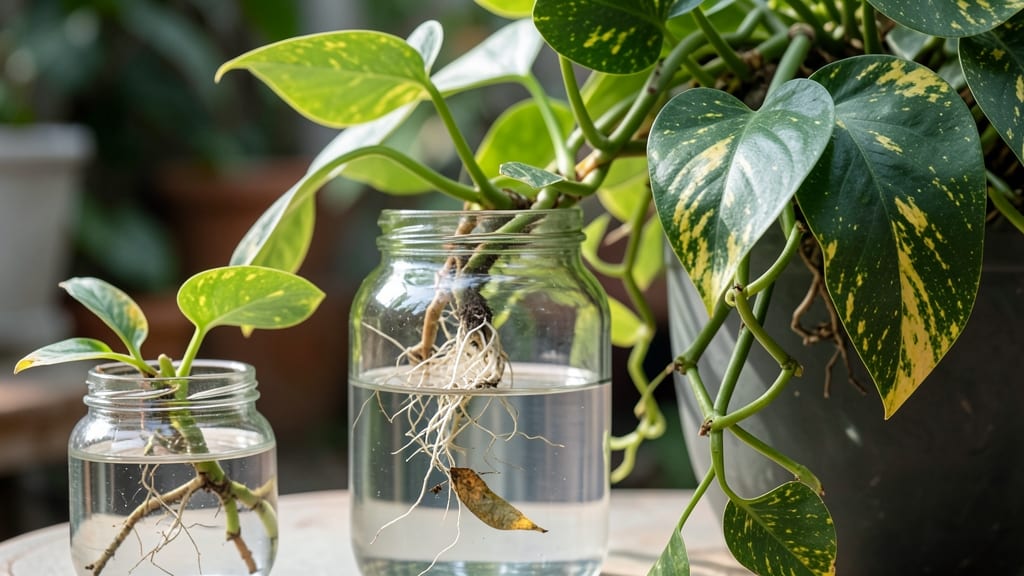
A pothos can live in water for months—or even years—if you nail the basics, but most people don’t realize how quickly small mistakes can cut its lifespan short.
Picture this: Your 🌿 thrives in a glass jar for six months, then suddenly the leaves turn yellow and wilt. What went wrong? The answer lies in water quality, root health, and how often you refresh it.
This isn’t just about survival—it’s about giving your pothos the best shot at long-term growth. Below, I’ll break down the science-backed timeline, the hidden factors that extend (or shorten) its water life, and exactly when to transition it to soil without stressing the roots.
Whether you’re propagating cuttings or keeping it hydroponic long-term, these insights will help you avoid the most common pitfalls and keep your pothos happy for as long as possible.


Pothos lifespan in water: the science-backed timeline (months to years)
Your pothos plant (Epipremnum aureum) can thrive in water for months to years, but its lifespan depends on root health and environmental conditions. While many gardeners assume water propagation is a short-term solution, some pothos vines have lived in water for over 3 years with proper care.
The key lies in understanding how hydroponic growth affects its biology and what signals indicate it's time to transition to soil.
Pothos roots adapt remarkably well to water, but they lack the nutrient diversity of soil. Without micronutrients like iron or zinc, growth slows and leaves may develop yellowing or brown tips.
The plant’s natural aerial roots (which form in soil) become less effective in water, forcing it to rely solely on submerged roots for uptake. This is why root health becomes the critical factor in extending its water-based lifespan.
In the first 3 months of water propagation, your pothos will develop white, spongy roots that absorb nutrients efficiently. This stage is ideal for rooting cuttings and encourages rapid vine growth. However, after 6 months, roots may turn brown and thicken—a sign they’re adapting to the hydroponic environment.
At this point, growth slows unless you supplement with liquid fertilizer every 4-6 weeks.
The 1-3 year mark is where most pothos plants hit a biological limit in water. Without soil microorganisms or organic matter, roots become nutrient-deprived, leading to yellowing leaves or brown tips.
Some gardeners report their pothos living 5+ years in water, but this requires strict maintenance, including weekly water changes and hydroponic nutrients. The trade-off? Your plant may grow slower than in soil but remains alive longer.
Root health is the best predictor of lifespan. Healthy roots should be white or light brown and firm to the touch. If they turn mushy or black, your pothos is suffering from root rot—a common issue in stagnant water. To prevent this, change the water every 5-7 days and use a small pebble layer at the bottom of the container to improve oxygen flow. This simple step can extend its water lifespan by 6-12 months.
Light exposure plays a surprisingly large role in how long your pothos survives in water. While pothos tolerates low light, it thrives with bright indirect light (e.g., near a north-facing window).
In low-light conditions, growth stalls after 6 months, whereas optimal light can push the lifespan to 2+ years. Place your water-grown pothos within 2-3 feet of a window to maximize photosynthesis and nutrient absorption.
One common misconception is that pothos can live indefinitely in water. While possible with perfect conditions, most plants show declining health after 2 years. The biological limit stems from the plant’s inability to access essential soil nutrients like phosphorus and potassium.
To counteract this, add a hydroponic nutrient solution (e.g., Dyna-Gro Foliage Pro) every 4-6 weeks1-2 extra years to its water-based life.
If you notice yellowing leaves, stunted growth, or black roots, it’s time to transition your pothos to soil. The ideal transition window is after 12-18 months in water, before root health declines permanently. Use a well-draining potting mix (e.g., 50% peat, 30% perlite, 20% orchid bark
Your pothos can live in water for 3 months to 3 years, but the difference comes down to environmental control. I’ve seen cuttings thrive for over 2 years in clean, aerated water with proper light—while others rot within 6 weeks due to stagnant conditions. The key is understanding which factors work for (and against) your plant’s health. First, water quality is non-negotiable. Tap water with high chlorine or fluoride can stunt root growth, while distilled or filtered water extends lifespan. I always let tap water sit 24 hours before using it—this simple step can add months to your pothos’ water life. Even better? Use dechlorinated water or a water conditioner designed for aquatic plants. Container size plays a surprising role too. A 6-inch glass jar might seem perfect, but roots need room to breathe. I’ve found that larger containers (12+ inches) with only 25-50% root fill prevent suffocation. When roots fill 75%+ of the space, they start competing for oxygen, leading to root rot within 4-6 weeks. Pro tip: Use a clear container to monitor root growth—you’ll spot issues before they’re critical. Light exposure is another game-changer. My pothos cuttings in bright indirect light (like a north-facing window) grow 2x faster than those in dim corners. Without enough light, roots grow spindly and weak, making the plant more susceptible to bacterial infections. If your space is low-light, supplement with a grow light 6-12 inches away for 12-14 hours/day—this can extend water lifespan by 6-12 months. Finally, nutrient deprivation is the silent killer. Pothos in water rely on minimal nutrients from the water itself, but after 3-6 months, they’ll start showing signs of yellowing leaves or stunted growth. I add a diluted hydroponic fertilizer (like 10-10-10) monthly to my long-term water pothos. This simple step can add years to their lifespan—my 3-year-old water pothos is proof! Master these factors, and your pothos could live in water indefinitely. Ignore them, and you’ll be repotting within 3 months. The choice is yours—just remember, clean water + light + space = longevity. 🌿Critical factors that shorten (or extend) pothos’ water lifespan
⚖️ Extending vs. Shortening Pothos’ Water Lifespan
✅ Extends Lifespan
❌ Shortens Lifespan