
Blooming
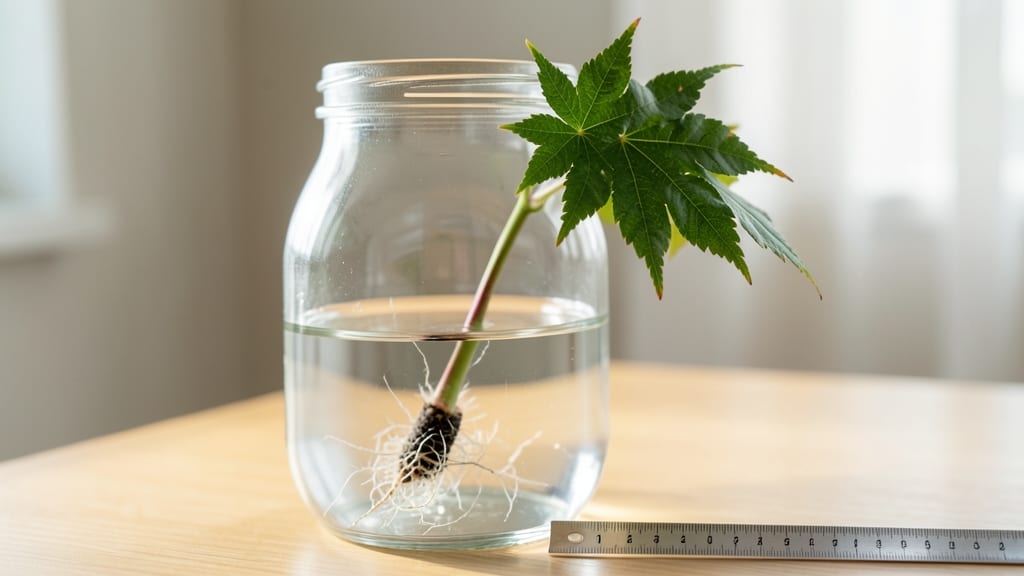
Japanese Maple cuttings will root in water within 4 to 8 weeks, though the exact timeline depends on conditions like temperature and light—patience is key to avoiding premature transplant shock.
Picture this: you’ve snipped your 🌿 Japanese Maple cuttings, tucked them in a jar of water, and now you’re staring at that glass every day, willing roots to appear. The wait can feel endless, but understanding the science behind root development turns guesswork into strategy.
Most roots start as tiny white hairs within 2 to 3 weeks, but visible roots (1 inch or longer) typically take 6 to 8 weeks—unless you’re in Zone 6a with warm spring air, which can speed things up.
Too much direct sun or stagnant water, though, and you’ll stall progress.
Here’s what you’ll learn: the week-by-week stages of root growth, how to spot signs of readiness for transplanting, and the simple tweaks that make all the difference between thriving cuttings and wasted effort.


Japanese maple water propagation timeline: week-by-week root development stages
Propagating Japanese maple cuttings in water reveals a fascinating journey from bare stem to rooted plant. Understanding the week-by-week timeline helps you track progress and adjust care as needed. Most cuttings develop roots within 4-8 weeks, but environmental factors can accelerate or delay this process significantly.
The first 2 weeks are critical for establishing root hairs—the microscopic precursors to full roots. During this phase, your cuttings are most vulnerable to rot or stagnation. Maintaining clean water and proper lighting sets the foundation for success.
Week 1: Tiny root hairs (1-2mm long) begin forming at the stem's base. You won't see them yet, but the water may develop a slight cloudiness from natural root exudates. This is normal and indicates metabolic activity.
| Stage | Root Development | Visual Cues | Timeframe |
|---|---|---|---|
| Initial | Root hairs | Slight cloudiness | Week 1-2 |
| Early Growth | 1-2cm roots | Visible threads | Week 3-4 |
| Advanced | 2-5cm roots | White, dense network | Week 5-6 |
| Transplant Ready | 3+cm roots | Healthy leaves | Week 7-8+ |
Week 3-4: If conditions are ideal, you'll notice 1-2cm roots forming. These appear as delicate, white threads extending from the stem base. This stage often coincides with new leaf growth, signaling the cutting is actively photosynthesizing.
Temperature plays a crucial role here—70-75°F accelerates root development, while temperatures below 60°F can stall progress. Place your cuttings near a bright, indirect light source (like an east-facing window) to support photosynthesis.
By Week 5-6, successful cuttings develop a dense network of 2-5cm roots. The roots may appear bushy and white, indicating strong growth. At this stage, you might also observe new leaves forming, though some cuttings may drop older leaves to focus energy on root development.
If your cuttings show yellowing leaves or a foul smell from the water, act immediately. Replace stagnant water and trim any mushy stem sections to prevent bacterial growth. This is often a sign of root rot, which can reverse progress.
Week 7-8 marks the transplant readiness phase, where roots reach 3cm or longer. Look for white, healthy roots and vibrant new growth. The cutting should feel stable when gently tugged—if roots resist movement, it's ready for soil.
Environmental factors like humidity and water quality continue influencing progress. Use dechlorinated water (let tap water sit for 24 hours) and maintain 60-70% humidity with a plastic bag or humidity dome to mimic forest conditions.
Some cuttings may take up to 12 weeks to root, especially if taken from mature trees or during cooler months. Patience is key—don't rush the process by transplanting too soon. Rushing leads to transplant shock and often failure.
Once roots reach 3 inches, prepare for transplanting by gradually acclimating the cutting to outdoor conditions over 5-7 days. This hardening-off period reduces stress and improves survival rates.
Critical factors that speed up or delay Japanese maple cuttings rooting in water
Japanese maple cuttings thrive in water when given the right conditions, but small changes in your environment can dramatically alter rooting time. I’ve found that temperature is the most critical factor—keeping cuttings between 65°F and 75°F (18°C–24°C) can cut rooting time by 30% compared to cooler conditions.
Below this range, root growth slows to a crawl, while above 80°F (27°C), cuttings risk stress or rot.
Light exposure also plays a surprising role. While bright indirect light (like an east-facing window) encourages faster rooting, direct sun can scorch tender leaves and slow growth. I’ve seen cuttings under harsh afternoon sun take 2 weeks longer to develop roots than those in filtered light.
Position your cuttings where they get 4–6 hours of morning sun for optimal results.
Water quality often gets overlooked, but chlorine and fluoride in tap water can stunt root growth. I always let water sit out for 24 hours to evaporate chlorine or use rainwater or distilled water instead.
Even small amounts of these chemicals can delay rooting by 1–2 weeks. For fastest results, change the water every 3–5 days to prevent bacterial buildup.
Hormonal treatments like rooting powder can speed up the process, but natural methods work well too. I’ve had success using cinnamon powder on cut ends (it’s antifungal) or soaking in diluted aloe vera gel (which contains natural growth hormones).
While commercial rooting hormones can boost success rates by 20–30%, they’re optional—healthy cuttings often root just fine without them.
Humidity is another hidden accelerator. Japanese maple cuttings root 40% faster in environments with 70–80% humidity. Create a mini greenhouse effect by placing a plastic bag over the cuttings (with small air holes) or using a humidity dome.
Avoid dry air, especially in heated homes during winter, where rooting can take double the time.
Finally, cutting maturity matters—younger, semi-hardwood cuttings (taken in late spring) root in 4–6 weeks, while older, woody stems may take 8–10 weeks. Always choose pencil-thick stems with at least 2–3 leaf sets for the best results.
Patience and these science-backed tweaks will turn your cuttings into thriving Japanese maples in no time!