
Watering
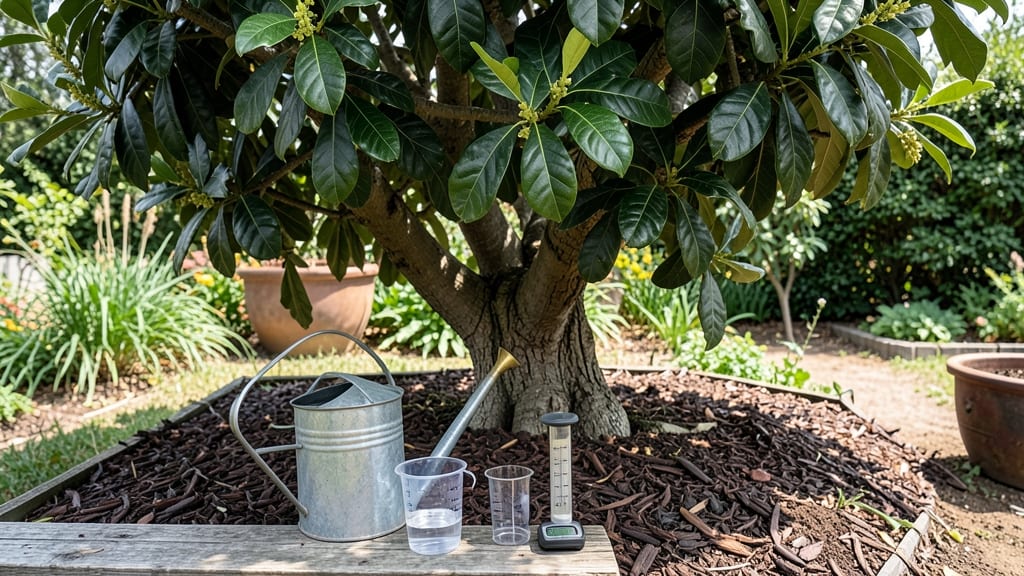
Avocado trees need consistent watering to thrive, especially in their first few years when roots establish deep in the soil 🥑.
Picture this: your young avocado tree wilts under the midday sun, its leaves curling at the edges, all because you watered it lightly every day instead of deeply once a week. That’s the difference between a healthy, fruit-bearing tree and one that struggles to survive.
Watering isn’t just about frequency—it’s about depth, timing, and soil type. A sandy soil drains fast, while clay holds moisture too long, both of which can stress your tree.
In this guide, I’ll break down the exact watering schedule for each season, how to adjust for containers vs. in-ground planting, and the telltale signs you’re over- or underwatering.
By the end, you’ll know exactly how much water your avocado tree needs—whether it’s 10 gallons in summer or just a sip in winter—to keep it lush, strong, and ready to bear fruit year-round.


Seasonal watering schedule for avocado trees by climate zone
Avocado trees (Persea americana) need consistent moisture to thrive, but their watering needs shift dramatically with seasonal changes and climate zones. In tropical climates, they may need daily watering during dry spells, while Mediterranean zones require reduced irrigation in winter.
The key is ensuring water penetrates 12-18 inches deep without causing root rot. I’ll break down monthly adjustments for three major climates—plus how to adapt for container-grown trees.
Your avocado tree’s water needs depend on soil type, container size, and rainfall patterns. Sandy soils dry faster than clay, and containers need daily checks in summer. Always water deeply in the morning to encourage strong root growth.
Let’s dive into the seasonal breakdown, starting with tropical zones where humidity keeps evaporation low but heat demands frequent hydration.
🌱
Monthly Watering Guide for Avocado Trees by Climate Zone
| Month | Tropical Zone | Subtropical Zone | Mediterranean Zone | Container Adjustments |
|---|---|---|---|---|
| January | 2-3x/week (15-20 gal) | Weekly (10-15 gal) | Bi-weekly (5-10 gal) | Daily (5 gal) |
| February | 2-3x/week (18-22 gal) | Weekly (12-16 gal) | Bi-weekly (7-12 gal) | Daily (6 gal) |
| March | Daily (20-25 gal) | 2x/week (15-20 gal) | Weekly (10-15 gal) | Every other day (7 gal) |
| April | Daily (22-28 gal) | 2-3x/week (18-22 gal) | Weekly (12-18 gal) | Daily (8 gal) |
| May | Daily (25-30 gal) | Daily (20-25 gal) | Weekly (15-20 gal) | Daily (9 gal) |
| June | Daily (28-32 gal) | 2-3x/week (22-28 gal) | Weekly (18-22 gal) | Every other day (10 gal) |
| July | Daily (30-35 gal) |
Signs your avocado tree is overwatered or underwatered (and how to fix it)Avocado trees are sensitive to watering extremes—too much causes root rot and yellowing leaves, while too little leads to dry, crispy foliage and stunted growth. Learning to read your tree's signals will help you adjust before damage becomes permanent. The key is understanding the visual and tactile clues your avocado tree uses to communicate its needs. Start by checking the soil moisture 2-3 inches below the surface. Stick your finger in—if it feels damp, hold off on watering. If it's bone-dry, it's time to hydrate. Container-grown avocados dry out faster than in-ground trees, so they often need more frequent but shallower watering. For in-ground trees, aim to water deeply 1-2 times per week during hot months, letting moisture penetrate 12-18 inches into the soil. ⚠️ Critical Watering Warning for Avocado TreesAvocado trees need consistent moisture but hate soggy roots. Overwatering is the #1 killer—it suffocates roots by blocking oxygen. How much water do avocado trees need? In most climates, 10-20 gallons per week for mature in-ground trees (adjust for containers). Always water in the morning to prevent fungal growth from damp foliage. 💡 Pro Tip: Use a moisture meter or the "finger test" to avoid guesswork. If soil stays wet for more than 2 days, you're overwatering. Yellowing leaves are the most common sign of overwatering. Start with the oldest leaves near the base—if they turn yellow and feel mushy, your tree is drowning. Pair this with blackened roots when you inspect the soil, and you’ve got a classic case of root rot. To fix it, stop watering immediately and improve drainage by adding perlite or coarse sand to the soil. For container trees, repot into a well-draining mix with 30% organic matter. On the flip side, underwatered avocado trees show signs like dry, crispy leaf edges and leaves that curl upward. The tree may also drop fruit prematurely or produce smaller avocados. If the soil feels dry more than 2 inches down, it’s time to water. For recovery, give your tree a deep soak (10-20 gallons for mature trees) and mulch around the base to retain moisture. Water in the early morning to minimize evaporation and reduce stress on the roots. Container-grown avocados require extra attention because their roots are confined. Check soil moisture every 3-4 days in summer—containers dry out quickly. If the top inch feels dry, water until it drains from the bottom. For in-ground trees, focus on deep, infrequent watering to encourage strong root growth. Avoid shallow watering, which only wets the surface and promotes weak, shallow roots that struggle to support the tree. Adjust your watering based on the season and climate. In summer, avocado trees may need watering every 2-3 days, while winter watering can drop to once every 2-3 weeks. Pay attention to local rainfall—if you’ve had more than 1 inch of rain in a week, skip your scheduled watering. Always prioritize morning watering to prevent fungal diseases like root rot or powdery mildew, which thrive in damp conditions. With practice, you’ll develop a feel for your avocado tree’s needs. Remember, consistency is key—avocado trees prefer steady moisture over fluctuating water levels. By tuning into these signs and adjusting your approach, you’ll keep your tree thriving and producing juicy avocados for years to come. 🥑 |