
Plants
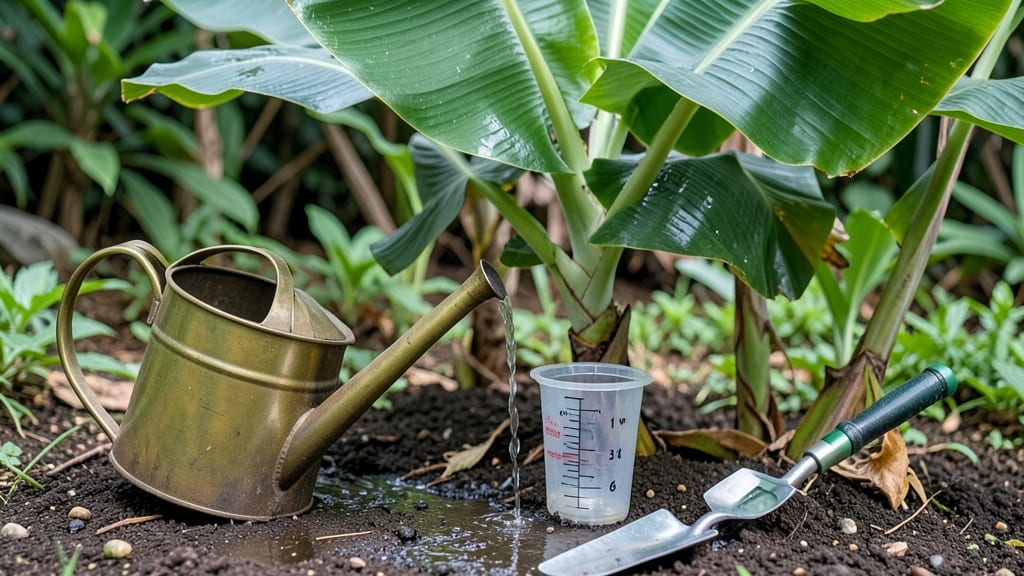
Banana plants need consistent moisture to thrive in their tropical home—think 1–2 inches of water per week for mature plants, but adjust for heat, soil, and growth stage.
Picture this: your 🍌 is drooping by midday, even though you watered yesterday. That’s not wilting—it’s a cry for help. Banana plants drink deeply, and their roots demand steady hydration, especially in containers where soil dries out faster.
But here’s the catch: too much water is just as deadly as too little. Yellowing leaves or a mushy pseudostem? You’ve likely overdone it. The key lies in reading your plant’s signals—soil moisture, leaf texture, and even the air’s humidity.
In this guide, I’ll break down exactly how much water banana plants need at each growth stage, how to spot over- or under-watering, and how to tweak your schedule for rain, drought, or containers. No guesswork—just a thriving, fruit-laden plant.


Banana plant watering requirements by growth stage: a detailed breakdown
Banana plants thrive when their watering routine matches their growth stage. As a tropical plant, they demand consistent moisture, but the exact amount changes dramatically from seedling to fruiting.
Understanding these shifts prevents common pitfalls like root rot or stunted growth. Each phase has unique soil moisture targets and frequency needs—let’s break it down.
For seedlings, the priority is keeping soil evenly moist but not soggy. Young roots are delicate, and too much water can suffocate them. Aim for about 1 inch of water per week, delivered through gentle watering at the soil base rather than overhead.
This mimics their natural tropical environment where rainfall is frequent but not overwhelming.
Here’s a quick reference for watering needs across all growth stages:
The vegetative stage (6-12 months) is when banana plants need the most water—up to 2 inches per week. This is their power-growth phase, where the pseudostem thickens and leaves expand rapidly.
Use a hose or drip irrigation to deliver water directly to the base, avoiding wetting the leaves to prevent fungal diseases like black sigatoka. Mulching with straw or wood chips helps retain moisture.
During the flowering stage (12-18 months), watering becomes slightly less frequent but deeper. The plant needs 2-3 inches of water per week to support the heavy flower spike and developing fruit.
Reduce overhead watering to minimize disease risk, and always water in the early morning so leaves dry quickly. Signs of stress here include wilting flowers or yellowing leaf tips.
Once the plant enters the fruiting stage (18+ months), the watering routine shifts again. Mature banana plants require 3 inches of water per week, delivered every 5-7 days. This deep watering encourages root growth and fruit development.
Overwatering now can lead to root rot, while underwatering causes fruits to stay small or develop poor flavor. Monitor soil moisture by sticking your finger 2 inches deep—if it’s dry, it’s time to water.
Container-grown banana plants need even more attention. Their roots dry out faster, so water every 2-3 days during hot weather, ensuring the soil stays consistently moist. In-ground plants can go slightly longer between waterings, especially in well-draining soil with organic matter.
Always check for signs of stress: drooping leaves mean it’s thirsty, while yellowing or mushy stems signal overwatering.
Adjust your watering based on your local climate. In tropical regions, banana plants may need daily watering during dry spells, while subtropical zones can stretch waterings to every 5-7 days.
Always prioritize deep watering over frequent shallow sessions to encourage strong root systems. With the right approach, your banana plant will reward you with lush growth and sweet, plentiful fruit.
Seasonal watering adjustments for banana plants in different climates
Banana plants thrive in tropical climates but adapt surprisingly well to subtropical and even temperate zones—with adjustments. In monsoon regions, heavy rains can drown roots, while drought-prone areas demand frequent deep watering.
The key is understanding your local rainfall patterns and soil drainage to avoid root rot or stress-induced fruiting failure.
I’ve grown bananas in USDA Zones 9-12, and the biggest lesson? Consistency is critical. A banana plant in Florida’s humidity needs less frequent watering than one in California’s dry valleys.
Even container-grown bananas dry out faster, requiring daily checks during summer. Let’s break down how to tailor your watering schedule by climate.
🌱 Comparison Table: Banana Plant Watering by Climate
In tropical climates, like Hawaii or Puerto Rico, banana plants often get enough rain to survive with minimal intervention. However, monsoon seasons can overwhelm roots—always ensure elevated beds or raised planters for excess runoff.
I once lost a Dwarf Cavendish to root rot after a week of torrential rains; since then, I’ve sworn by French drains around the base.
For subtropical zones (think Southern California or Florida’s inland), the challenge shifts to summer droughts. Here, drip irrigation is a game-changer—delivering water slowly at the roots reduces evaporation and fungal risks.
Pair this with 6 inches of mulch to lock in moisture. Pro tip: Water at dawn to prevent sigatoka leaf spot, a fungal disease thriving in damp evenings.
In temperate climates, like Zone 9’s coastal areas, bananas can fruit but need winter protection. Reduce watering to bi-weekly once temperatures drop below 50°F, and never let soil freeze.
I’ve had success overwintering potted bananas in unheated garages with grow lights—just keep the soil barely moist to mimic dormancy.
If you’re in a drought-prone area, like Arizona or Nevada, bananas are still possible but demand extra care. Use clay pots (they dry slowly) and hydrogel crystals to retain moisture. Shade cloth (30-50%) protects leaves from sun scorch, while morning watering prevents evaporative loss.
My Red Dacca bananas in Phoenix thrive with this setup—just never skip watering during heatwaves.
💧 Final Tip: Always check soil moisture 2 inches deep before watering. Stick your finger in—if it’s dry, it’s time. Overwatering is the #1 killer of banana plants, but consistent moisture is non-negotiable for fruit production.
Adjust your schedule every 2-3 weeks based on weather, and your bananas will reward you with juicy, sweet harvests! 🌿