
Trees
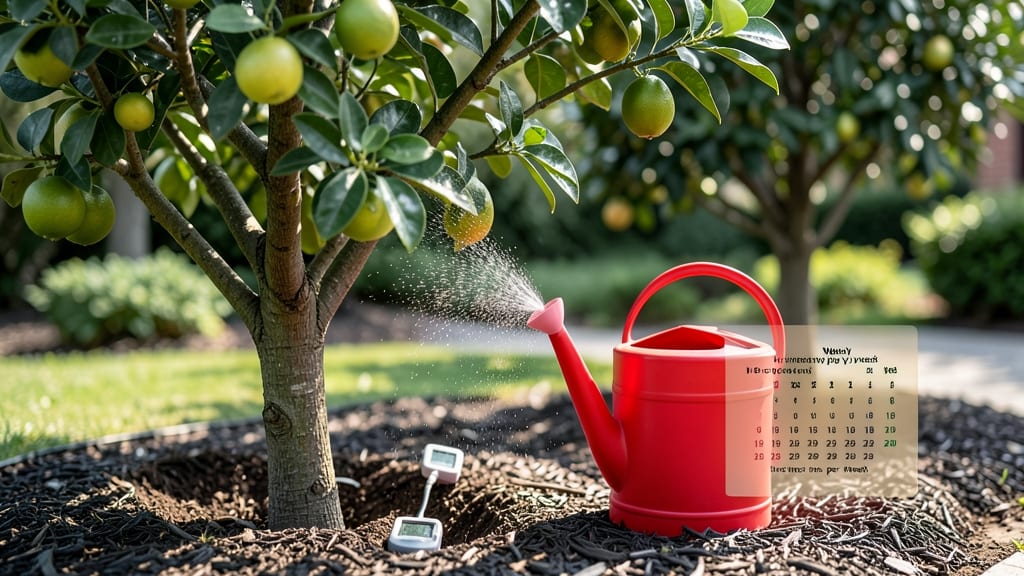
How often should fruit trees be watered? The secret to strong roots and bountiful harvests 🍎 lies in deep, infrequent soaks at the right times.
Picture this: you’ve spent months nurturing your young fruit tree, only to watch it struggle because you’re either drowning it in daily sprinkles or letting it wilt between sporadic waterings. The truth? Most gardeners get this wrong, and it shows in stunted growth or fruit that never fully ripens.
Here’s the game-changer: a science-backed schedule that adjusts for age, season, and soil—so you’re not guessing whether your tree is thirsty or already soggy. We’ll cover everything from the critical first two years to drought-proofing mature trees, plus how to tell if you’re overdoing (or underdoing) it.
By the end, you’ll know exactly how often to water—whether your tree is a young sapling or a heavy-fruiting veteran—and how to keep its roots happy without wasting a drop.
Seasonal watering schedule for fruit trees by growth stage
Watering fruit trees isn't a one-size-fits-all task—it depends on their age, season, and growth phase. Young trees need frequent deep watering to establish roots, while mature trees thrive with less frequent but deeper soaks.
The key? Understanding when your tree is blossoming, fruiting, or dormant to adjust your watering strategy accordingly.
I’ve grown apple, peach, and citrus trees for over a decade, and I’ve learned that spring and summer demand the most attention. During these months, fruit trees need consistent moisture to support blossoms and fruit development.
But in fall and winter, watering needs drop dramatically as trees enter dormancy. Let’s break it down by month and growth stage.
🌱 Pro Tip: Always water at the base of the tree (not the leaves) to prevent fungal diseases and encourage deep root growth. Use a soaker hose or drip irrigation for even distribution.
| Season | Young Trees (1-3 yrs) | Mature Trees (4+ yrs) | Soil Check |
|---|---|---|---|
| Spring (Mar-May) | Weekly (15-20 gal) | Bi-weekly (30-40 gal) | Top 2-3" dry |
| Summer (Jun-Aug) | Every 5-7 days (20-25 gal) | Weekly (40-50 gal) | Top 3-4" dry |
| Fall (Sep-Nov) | Bi-weekly (10-15 gal) | Monthly (20-30 gal) | Top 4-6" dry |
| Winter (Dec-Feb) | Monthly (5-10 gal) | Minimal (5-10 gal) | Top 6-8" dry |
Adjust for clay soil (water less often) or sandy soil (water more frequently).
In spring, young trees need weekly deep watering (15-20 gallons) to support new growth and blossoms. This is when roots are actively expanding, so consistency is critical. Mature trees can handle bi-weekly watering but still require 30-40 gallons per session to sustain their larger root systems.
Summer is the most demanding season for fruit trees, especially when they’re bearing fruit. Young trees should be watered every 5-7 days, while mature trees need weekly deep soaks. The goal is to keep the top 3-4 inches of soil moist—never soggy.
If your tree’s leaves start wilting or curling, it’s a sign of underwatering or heat stress.
As fall arrives, reduce watering frequency but maintain moderate moisture. Young trees still need bi-weekly watering (10-15 gallons), while mature trees can transition to monthly deep watering. This helps prepare them for winter dormancy without shocking their roots.
During winter, most fruit trees enter dormancy and require minimal watering. A light monthly soak (5-10 gallons) is enough to prevent complete dry-out. Overwatering in winter can drown roots and encourage fungal growth.
Always check soil moisture by inserting a finger 2-3 inches deep—if it’s dry, water lightly.
One common mistake I see is watering too lightly or too frequently. Fruit trees need deep watering to encourage roots to grow downward. Shallow watering leads to weak, shallow roots that can’t support the tree during drought or heavy fruit loads.
Use a garden trowel or moisture meter to check soil depth regularly.
For container-grown fruit trees, the rules change slightly. These trees dry out much faster and may need daily watering in summer. Always ensure the pot has drainage holes and use a well-draining potting mix to prevent root rot.
Finally, mulch is your best friend for retaining moisture and regulating soil temperature. Apply a 3-inch layer of organic mulch (like wood chips or straw) around the base of your tree, keeping it 6 inches away from the trunk to prevent rot. Replenish mulch annually for optimal results.
Signs of overwatering vs underwatering in fruit trees (with fixes)
Fruit trees are surprisingly sensitive to water—too much or too little can stunt growth, reduce fruit yield, or even kill your tree. The key is learning to read their visual cues and adjusting your watering routine based on soil type and season.
Let’s decode the signs so you can keep your trees thriving.
First, check the soil moisture by sticking your finger 2-3 inches deep. If it’s damp, hold off on watering. For clay soil, water less frequently but deeply, while sandy soil drains quickly, requiring more regular watering. Understanding these basics helps prevent both extremes.
Overwatering is just as harmful as underwatering. Look for yellowing leaves, especially on lower branches, or mushy brown roots when you dig gently. Overwatered trees may also develop fungal diseases like root rot or powdery mildew, which appear as white or black spots on leaves.
💧 Watering Frequency Guide
| Soil Type | Young Trees (1-3 yrs) | Mature Trees (4+ yrs) |
|---|---|---|
| Clay | Every 10-14 days (deep soak) | Every 3-4 weeks (check moisture) |
| Sandy | Every 5-7 days (shallow roots) | Every 7-10 days (deep watering) |
| Loam | Every 7-10 days | Every 2-3 weeks |
For underwatered trees, watch for wilted leaves that don’t perk up after watering, crispy leaf edges, or premature fruit drop. Young trees may also show stunted growth or small, sparse leaves.
If you notice these signs, water deeply right away and monitor the tree’s recovery over 24-48 hours.
To fix overwatering, stop watering immediately and improve drainage by adding organic matter like compost or perlite. For underwatering, water deeply at the tree’s drip line (the outer edge of the canopy) and repeat every 3-5 days until the soil is evenly moist.
Always water in the early morning to reduce evaporation and fungal risks.
Remember, consistency is key. Adjust your watering based on weather patterns—increase during heatwaves and reduce during rainy spells. With practice, you’ll master the balance and enjoy a thriving fruit tree for years to come. 🌳