
How To
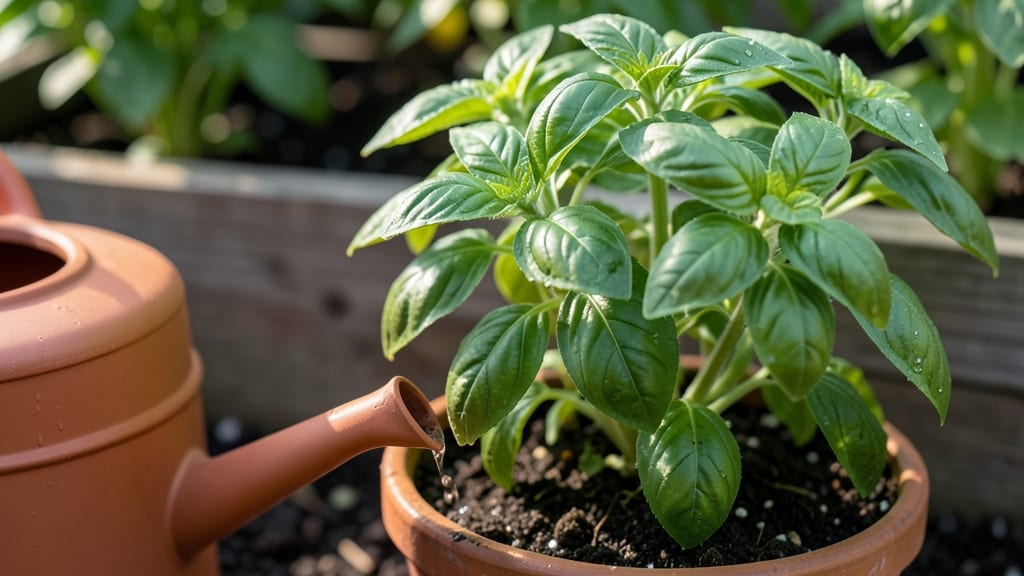
Watering basil plants the right way keeps them thriving and packed with flavor—every 1-2 days is the sweet spot, but it depends on whether your 🌿 is potted or planted in the garden.
Picture this: you pinch off a sprig of basil, expecting that bright, fresh aroma, only to find it tastes dull or even bitter. That’s usually a sign your watering routine is off—either too much or not enough.
The key is reading your plant’s cues, not just sticking to a rigid schedule.
Basil’s shallow roots dry out fast in hot weather, but overwatering smothers them just as quickly. In containers, soil dries faster than in garden beds, so you’ll need to check moisture more often. Meanwhile, heavy clay soil holds water longer, while sandy soil drains it away.
Below, I’ll break down exactly how to tell when your basil needs a drink—plus how to adjust for heatwaves, rain, and even indoor growing. By the end, you’ll know the perfect watering rhythm for basil that tastes like it came straight from an Italian kitchen.
Optimal watering frequency for basil by growth stage (potted vs garden)
Basil plants have unique watering needs that change dramatically from seedling to flowering stages. Container-grown basil dries out faster than garden basil due to limited soil volume, while in-ground plants benefit from natural moisture retention. Understanding these differences ensures your basil stays vibrant, flavorful, and disease-free throughout the growing season.
Your watering schedule should account for three critical growth phases: seedling (0-4 weeks), vegetative (4-8 weeks), and flowering (8+ weeks). Each stage requires different moisture levels—seedlings need gentle hydration, while mature plants crave consistent dampness.
Environmental factors like temperature, humidity, and wind also demand adjustments, especially during summer's peak heat.
🌱
| Growth Stage | Potted Basil (Container) | Garden Basil (In-Ground) | Soil Moisture Target | Frequency Adjustments |
|---|---|---|---|---|
| Seedling (0-4 weeks) | Every 1-2 days Mist leaves daily |
Every 2-3 days Light watering |
60-70% moisture Keep top 1" damp |
Use seedling trays Cover with plastic for humidity |
| Vegetative (4-8 weeks) | Every 1-2 days Deep watering |
Every 2-4 days 1 inch/week |
70-80% moisture Top 2" consistently damp |
Water at soil level Avoid wetting leaves |
| Flowering (8+ weeks) | Every 2-3 days Reduce by 20% |
Every 3-5 days Monitor closely |
60-70% moisture Prevent waterlogging |
Pinch flower buds Reduce fertilizer |
| Environmental Factors | ↑Heat: Daily watering ↑Wind: Morning water |
↑Humidity: Water less ↑Rain: Skip watering |
Adjust for temperature Use mulch in garden |
Monitor leaf color Yellow = overwatered |
During the seedling stage, your basil's roots are delicate and shallow, making them highly sensitive to both drought and waterlogging. In containers, I recommend using a spray bottle for misting in the morning to maintain 60-70% soil moisture while preventing fungal diseases.
For garden basil, focus on light, frequent watering—never let the top inch dry out completely, or your seedlings will bolt prematurely.
As your basil enters the vegetative stage (4-8 weeks), it develops a stronger root system capable of handling deeper watering sessions. Container-grown plants still require daily checks since their soil dries out 30% faster than garden soil.
Aim for 70-80% moisture in the top 2 inches, watering at the soil base rather than overhead to prevent leaf diseases like downy mildew.
When basil begins flowering, it signals the plant is shifting energy toward seed production. This stage demands reduced watering—cut back by 20-30% to prevent root rot in containers.
Garden basil can handle slightly longer intervals between waterings, but always check the top 3 inches of soil before adding more. Flowering basil loses its peak flavor, so pinch off buds to encourage leaf production.
Environmental conditions play a huge role in adjusting your watering schedule. During summer heatwaves (above 90°F/32°C), both potted and garden basil may need daily watering, especially in containers. Conversely, humid climates (like the southeastern U.S.) require less frequent watering—monitor for yellowing leaves, a sign of overwatering.
Windy conditions also increase evaporation, so water early in the morning to reduce loss.
For container-grown basil, pot size matters tremendously. A 5-gallon container holds moisture 2-3 days longer than a 1-gallon pot, so adjust your schedule accordingly. Always use pots with drainage holes and a well-draining potting mix (like 60% potting soil, 30% perlite, 10% compost) to prevent root rot.
In garden beds, mulching with straw helps retain moisture and regulate soil temperature.
Watch for
5 Soil check tricks to water basil like a pro
Watering basil correctly starts with understanding your soil's moisture levels. Unlike many herbs, basil hates soggy roots but wilts quickly when thirsty. The key is finding that goldilocks zone—just enough moisture without drowning the plant.
I've learned that relying on a schedule alone leads to over- or under-watering, so I now use these 5 soil checks to guide my watering routine.
Most gardeners make the mistake of watering on a fixed schedule, especially during hot summers or humid climates. Basil in pots dries out faster than in-ground plants, and heavy clay soil retains moisture longer than sandy mixes.
Instead of guessing, I check the soil first—this simple habit has saved my basil from both root rot and wilting.
Stick your finger into the soil—if it feels dry at 1 inch, water immediately. For pots, check 2 inches deep. Sandy soil dries faster, so test more often.
Lift the pot or check the soil surface—dry crust or cracked soil means it's time to water. Dark, damp soil signals hold off. For in-ground basil, look for dry patches around the base.
Lift your potted basil—if it feels light, the soil is dry. A heavy pot means it still has moisture. This trick works best for small containers where weight changes are noticeable.
A digital moisture meter gives exact readings. Insert the probe 1-2 inches deep—red/orange means dry, green means moist. I use mine for container gardens where visual cues are trickier.
Wilting leaves by midday mean the plant needs water. However, if leaves feel soggy or yellow, you've overwatered. Basil leaves should be firm and vibrant—never limp or mushy.
One common mistake I see is watering basil only when the leaves droop. By then, the roots may already be stressed. Instead, I water preventatively—when the soil is slightly dry but not bone-dry. This keeps my basil perfectly hydrated without risking root issues.
For potted basil, I water every 1-2 days in summer, but I always check the soil first. In-ground basil needs watering every 2-3 days, but this varies with weather conditions.
After a heavy rain, I skip watering entirely and let the soil dry out slightly before the next watering.
Pro tip: Water deeply but infrequently. A slow drip or watering at the base encourages deep root growth, making your basil more resilient. Avoid wetting the leaves to prevent fungal diseases like downy mildew, which thrives in damp foliage.
Mastering these soil checks has transformed my basil care. My plants stay lush and flavorful, and I no longer waste water or risk root rot. Give these tricks a try—your basil will thank you with bold, aromatic leaves all season long! 🌿