
How To
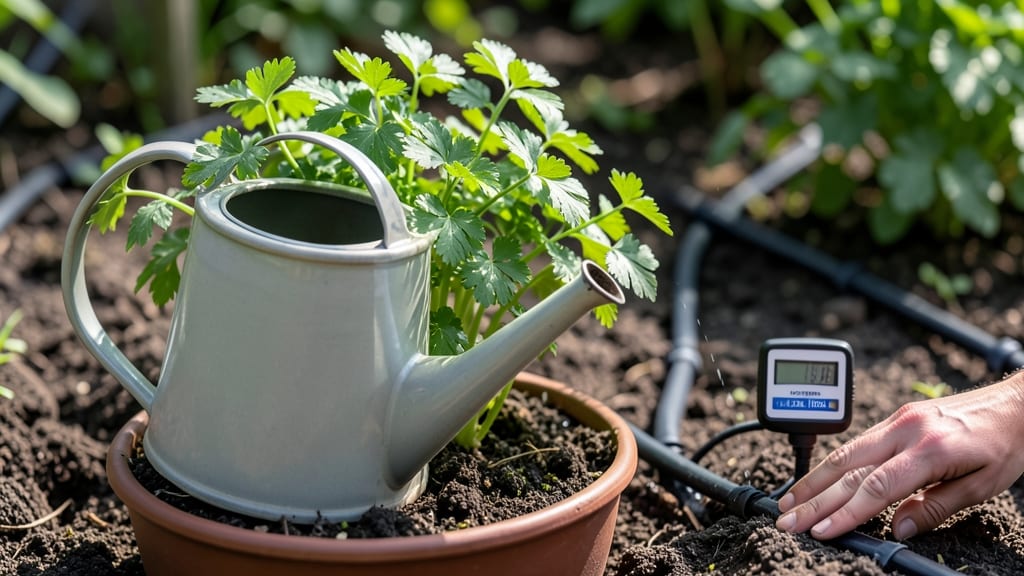
To water parsley properly, aim for consistent moisture—about every 2-3 days in warm weather, less in cool seasons—so the soil stays damp but never soggy.
Struggling to keep your parsley thriving? Overwatering or underwatering can turn your fresh herb into a sad, wilted mess—here’s the exact watering schedule (and foolproof test) to grow parsley that stays vibrant all season.
Parsley 🌿 thrives when the top inch of soil feels lightly moist to the touch, like a wrung-out sponge. Too much water drowns the roots, while too little causes leaves to yellow or crisp at the edges—neither of which you want when you’re harvesting for soups or garnishes.
Below, I’ll break down the ideal watering rhythm for your climate, how to spot signs of proper hydration, and what to do if your parsley starts looking stressed. No more guesswork—just lush, flavorful parsley every time.
Parsley watering schedule: ideal frequency by season and climate
Parsley thrives on consistent moisture but despises soggy roots—finding the balance is key to lush, flavorful growth. Unlike drought-tolerant herbs, parsley needs regular hydration to develop its signature sweet flavor, especially during hot summers.
The challenge? Overwatering leads to root rot, while underwatering causes bitter, wilted leaves. Let’s break down the science-backed schedule tailored to your climate and parsley’s growth stage.
Your parsley’s watering needs shift dramatically between seedlings, mature plants, and seasonal changes. For example, a 1-inch-tall seedling requires daily moisture, while a 2-foot mature plant can handle slightly drier soil.
Soil type plays a huge role too: Sandy soil drains quickly (water more often), while clay soil holds moisture longer (water less frequently). Even your local climate dictates the rhythm—humid regions need less water than arid ones.
Here’s the golden rule for parsley watering: Keep the top 1-2 inches of soil consistently moist but never waterlogged. The easiest way to check? Stick your finger into the soil—if it feels dry at that depth, it’s time to water.
Morning watering is ideal because it allows leaves to dry before evening, reducing fungal risks like downy mildew. Let’s dive into the seasonal breakdown and soil-specific adjustments to keep your parsley thriving year-round.
| Season/Stage | Watering Frequency | Soil Depth to Check | Climate Adjustments | Key Signs |
|---|---|---|---|---|
| Seedlings (0-4 weeks) | Daily (light misting) | Top ½ inch | Humid: Every other day | Wilted leaves = needs water |
| Established Plants (Spring) | Every 2-3 days | Top 1-2 inches | Sandy soil: Daily | Yellowing = overwatered |
| Summer Heatwave | Daily (deep watering) | Top 2 inches | Arid: Early morning only | Crisp leaves = perfect hydration |
| Fall Transition | Every 3-4 days | Top 1 inch | Rainy: Reduce by 30% | Dull leaves = underwatered |
| Winter Dormancy | Bi-weekly (light) | Top ½ inch | Frozen ground: Skip until thaw | Brown edges = too dry |
| Container-Grown | Every 1-2 days | Top 1 inch | Pots dry faster: Check twice daily | Wilting = immediate water |
Let’s tackle spring watering first, when parsley is just getting started. During March-May, your plants are transitioning from seedlings to mature growth. Water every 2-3 days, ensuring the soil stays moist but not saturated.
If your region experiences cool, rainy springs, reduce frequency to every 4-5 days to avoid waterlogged roots. For sandy soils, you may need to water daily—these soils drain so quickly that parsley can’t absorb enough moisture between waterings.
Summer is the most critical season for parsley watering. With high temperatures and intense sunlight, parsley can dry out in hours. Switch to daily watering during heatwaves, focusing on deep watering that reaches 4-6 inches down. Early morning is best to prevent evaporation and fungal growth.
If you notice yellowing leaves or wilting by noon, increase frequency to twice daily in extreme heat. Mulching with straw can help retain moisture and keep roots cool.
As fall arrives, parsley’s water needs decrease as temperatures drop. Shift to every 3-4 days, checking soil moisture carefully. If your area experiences autumn rains, reduce watering by 30% to prevent root rot.
Look for dull or crispy leaves as signs your parsley needs hydration. In USDA Zone 6a, where frost arrives by late October, parsley may go dormant—reduce watering to bi-weekly and protect plants with mulch.
Winter care is minimal, but not zero. Parsley is cold-hardy but still needs occasional watering. Only water when the top ½ inch of soil feels dry, typically every 10-14 days
The finger-dip test: how to check soil moisture like a pro
Parsley thrives when its roots stay consistently moist, but guessing can lead to soggy soil or parched plants. The finger-dip test is my go-to method for checking moisture levels—it’s free, accurate, and works for both garden beds and containers.
This simple technique lets you adjust watering habits based on real-time soil conditions, not just a calendar schedule.
Start by identifying the right depth to test. For parsley, insert your finger about 1-2 inches deep into the soil near the plant’s base. This depth mirrors where most roots absorb water.
If the soil feels damp at this level, hold off on watering. If it’s dry, it’s time to hydrate your parsley.
Pay close attention to the texture and color of the soil. Ideal moisture feels like a damp sponge—it holds together slightly when squeezed but doesn’t crumble or feel sticky. Darker, earthy tones indicate moisture, while pale or crumbly soil signals dehydration. These cues help you avoid both overwatering and underwatering.
⚠️ Watering Parsley: The Danger Zone
Parsley needs consistent moisture but hates soggy roots. Water every 2-3 days in summer, but always check first—overwatering causes root rot, while underwatering leads to yellowing leaves. Adjust frequency based on your climate: daily in heat, every 4 days in fall.
For container-grown parsley, the finger-dip test is even more critical because pots dry out faster. Test the soil at the edges of the pot, where roots often spread. If the soil feels dry at the edges, water thoroughly until it drains from the bottom.
Containers also benefit from a moisture meter if you’re unsure—just dip it in for a quick read.
Seasonal adjustments matter too. In hot summer months, parsley may need watering every 1-2 days, while in cooler spring or fall, every 3-4 days is often enough. Always water in the morning to reduce evaporation and fungal risks. This routine keeps your parsley lush and ready for harvest.
Remember, the finger-dip test isn’t just about moisture—it’s about plant health. If your parsley’s leaves feel crisp and vibrant, you’re on the right track. But if they wilt or turn yellow, it’s time to reassess your watering habits.
With this method, you’ll grow parsley that’s flavorful and resilient all season long. 🌿