
Watering
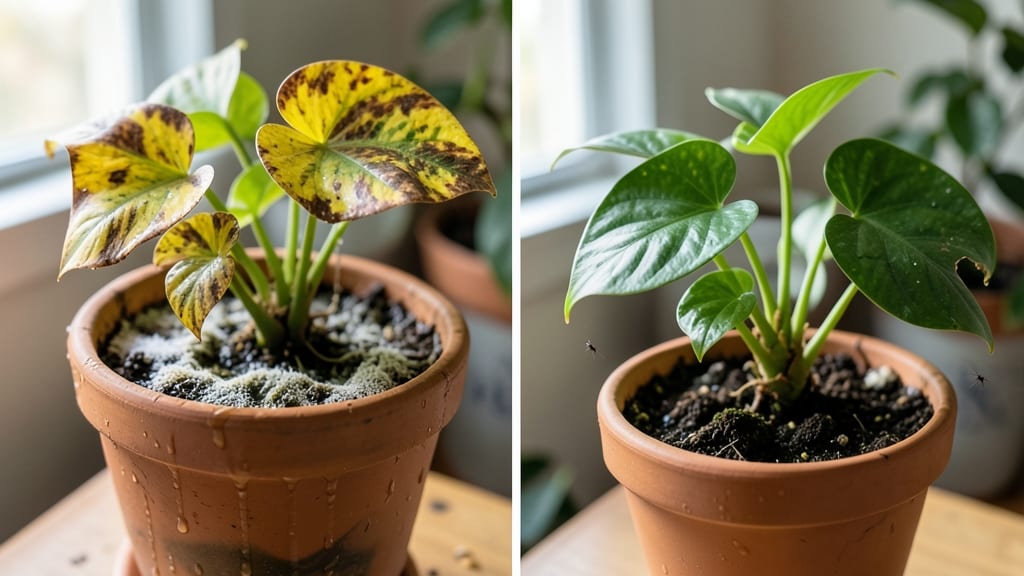
What happens when a plant is overwatered causes root suffocation from oxygen deprivation, triggering root rot, yellowing foliage, drooping stems, and slowed growth. The soil may smell foul, and without prompt intervention, the plant can decline and die.
This happens because waterlogged soil creates an anaerobic environment where harmful bacteria thrive, breaking down root tissues while preventing nutrient absorption. 🌱 The plant's natural defenses weaken, making it vulnerable to secondary infections.
I've seen this firsthand with ferns and calatheas—both show dramatic wilting within days of overwatering, even if they look healthy on top.
What makes this tricky is that plants often show symptoms after the damage is done. The roots may already be rotting before you notice the wilting or discoloration.
That's why I always check soil moisture by feeling it—if it's damp more than an inch below the surface, it's time to hold off on watering.
💡 In This Article
- How Overwatering Damages Plant Roots and Soil
- Step-by-Step Recovery Guide for Overwatered Plants
How overwatering damages plant roots and soil
The moment you overwater, you trigger a chain reaction in the soil. Roots need oxygen to respire—just like we need air to breathe.
When soil stays soggy for more than 24-48 hours, oxygen levels drop below 10% (normal air has 21% oxygen), creating an anaerobic zone where harmful bacteria like Pythium and Phytophthora multiply.
These microbes feast on root tissues, breaking down cell walls and clogging root pores with slimy biofilm. 🌱 Within 3-5 days, even healthy roots can show brown, mushy patches where cells have collapsed.
Chemically, overwatering leaches vital nutrients from the soil. Water-soluble minerals like nitrogen and potassium get flushed away through drainage, leaving roots starving even as they drown. The pH balance shifts too—excess moisture accelerates organic matter decomposition, releasing acids that further stress roots.
Imagine trying to drink through a clogged straw: that’s what your plant experiences when its roots can’t absorb water or nutrients efficiently. The telltale foul odor comes from sulfur compounds released by anaerobic bacteria breaking down organic matter.
What’s especially damaging is how root rot spreads. Fungal hyphae grow at 0.5-2 inches per day through moist soil, infecting new roots while cutting off water transport to leaves. This explains why wilting happens after overwatering—by then, the root system may already be 30-50% compromised.
The plant’s natural hormonal signals get disrupted too: ethylene gas builds up in waterlogged conditions, triggering premature leaf drop and stunted growth. 💫
Different plants react at different rates, but tropicals like ferns and calatheas show symptoms fastest (2-3 days), while succulents may take 1-2 weeks to display obvious signs.
The key factor is the plant’s native environment—species adapted to dry climates have shallower, more sensitive roots that rot quicker than deep-rooted perennials. That’s why your peace lily might recover from a single overwatering while your cactus could die within days.
Here’s the science behind the visible symptoms:
- Yellowing leaves: Chlorophyll breaks down when roots can’t supply nutrients, starting with older leaves first
- Wilting: Roots lose their ability to regulate water uptake, causing cells to lose turgor pressure
- Stunted growth: Ethylene gas inhibits cell division in meristems (growth points)
- Foul odor: Anaerobic bacteria produce hydrogen sulfide and other volatile compounds
The most critical moment is the first 48 hours after overwatering. During this window, roots still have some oxygen reserves, and prompt action can save up to 60% of root health.
That’s why I always recommend checking soil moisture before watering—if it feels damp just 1 inch below the surface, hold off. The difference between recovery and permanent damage often comes down to those first two days. ⚡