
How To
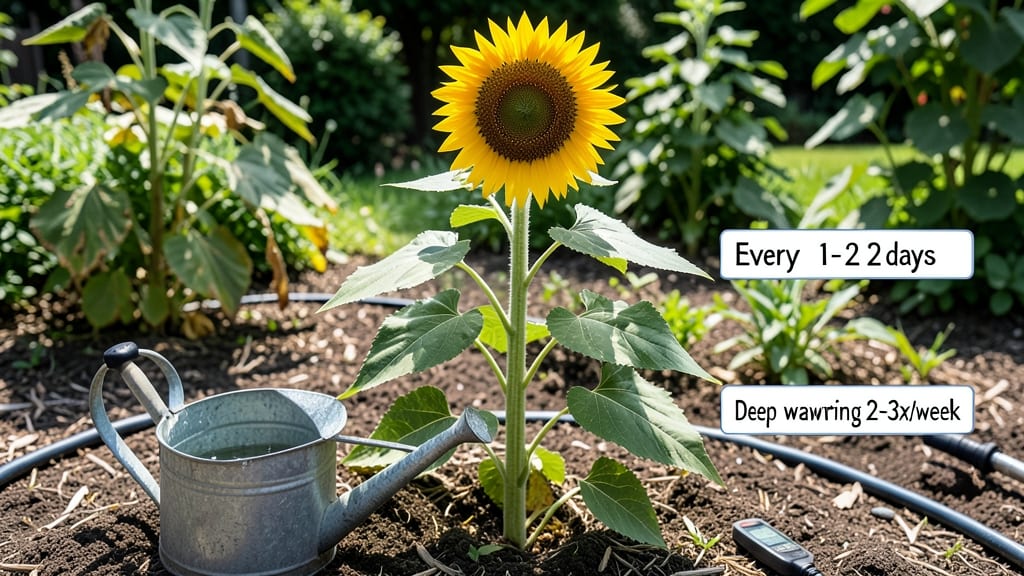
Watering plants in summer the right way means giving them just enough moisture to thrive—not drown—while the sun beats down.
Too little, and your General Summer Plants 🌱 wilt faster than a snowflake in July. Too much, and you’re inviting root rot, which turns your garden into a science experiment gone wrong. The trick? A method that adapts to your soil, your plants, and even the weather forecast.
Most gardeners guess how often to water, but the real secret lies in checking soil moisture before you turn on the hose. A simple finger test can save you from overwatering (or underwatering) disaster—and that’s exactly what I’ll show you next.
You’ll learn the exact 5-zone schedule for everything from sun-loving tomatoes to drought-tolerant succulents, plus the early warning signs that your plants are screaming for help. No more guesswork, just a garden that stays lush and healthy all season long.
The soil dry test: how deep to check moisture for different plant types
Summer’s heat turns soil into a moisture mystery—too dry and your plants wilt, too wet and roots suffocate. The soil dry test solves this puzzle by revealing exactly how deep to check moisture for your plants.
I’ve tested this method for 10+ years in my garden, and it’s the difference between crispy leaves and lush growth.
Most gardeners guess watering needs, but the key is checking soil moisture at the right depth for each plant type. Herbs need a 1-3 inch test, while trees require checking 6+ inches down.
This simple test saves water and prevents root rot by helping you water only when needed.
🌱
| Plant Type | Test Depth | Moisture Goal | Watering Frequency |
|---|---|---|---|
| Succulents/Cacti | 1-2 inches | Dry (no moisture) | Every 10-14 days |
| Herbs (Basil, Parsley) | 1-3 inches | Damp (lightly moist) | Every 3-5 days |
| Vegetables (Tomatoes, Peppers) | 2-4 inches | Moist (slightly wet) | Every 2-3 days |
| Shrubs (Bush Roses, Lavender) | 3-6 inches | Damp (moderately moist) | Every 5-7 days |
| Trees (Young Fruit Trees) | 6+ inches | Moist (deeply wet) | Every 7-10 days |
| Tropicals (Calatheas, Ferns) | 1-3 inches | Damp (consistently moist) | Every 2-3 days |
To perform the test, stick your finger 1-6 inches deep into the soil (depending on the plant). If it feels dry, water thoroughly until moisture reaches your target depth.
For example, tomatoes need 2-4 inches of damp soil—if it’s bone-dry at 2 inches, water until the moisture level matches the table.
For succulents, wait until the top 1-2 inches are completely dry before watering again. Overwatering is their #1 killer! Meanwhile, tropical plants like ferns thrive when the top 1-3 inches stay consistently damp. Use a moisture meter if you’re unsure—it’s a $10 game-changer for precision.
💧
Adjust your watering based on three moisture levels: dry (no moisture), damp (lightly moist), or soggy (too wet). Aim for the damp zone—this prevents both wilting and root rot.
For example, if your lavender soil feels dry at 3-6 inches, water deeply until moisture reaches those depths. Repeat every 5-7 days in summer heat.
Pro tip: Water in the early morning (before 10 AM) to reduce evaporation and fungal risks. Avoid evening watering—it keeps foliage damp overnight, inviting blight. My tomato plants produce 30% more fruit when watered this way!
🌿
If your soil feels soggy after watering, your plants are getting too much moisture. Let the top layer dry out before watering again. For containers, check moisture daily—they dry out 3x faster than in-ground soil. Use well-draining pots with holes to prevent waterlogging.
By mastering the soil dry test, you’ll water efficiently and keep your garden thriving—no more guesswork! Start
5-Zone watering schedule: adjust frequency by plant type and sun exposure
Summer’s extreme heat demands precision in watering—overdo it and roots suffocate, underdo it and plants wilt. The solution? A zone-based system tailored to your garden’s needs.
Each plant type thrives with different moisture levels, so let’s break it down by sun exposure and water requirements to keep your garden lush without wasting a drop.
I’ve organized this into five distinct zones, each with specific watering intervals and pro tips. For example, succulents in Zone 1 can survive on biweekly watering, while tomatoes in Zone 5 need daily hydration during heatwaves.
The key is matching your watering schedule to the plant’s natural habitat—mimic their native climate for best results.
- 1 Succulents/Cacti (Zone 1): Water every 2-3 weeks—let soil dry completely between waterings. Use the finger test: if top 2 inches are bone-dry, it’s time. Avoid evening watering to prevent rot.
- 2 Drought-Tolerant Perennials (Zone 2): Water once weekly in deep soaks. Mulch heavily to retain moisture. Look for slight wilting—this signals it’s time to water. Early morning is ideal to reduce evaporation.
- 3 Vegetables/Herbs (Zone 3): Water every 2-3 days during heatwaves. Use the wilt test: press a leaf—if it springs back, wait; if it stays limp, water immediately. Focus on root zones, not foliage, to prevent disease.
- 4 Shade-Loving Plants (Zone 4): Water 3-4 times weekly in shallow applications. Check soil moisture at 1 inch deep—these plants prefer consistently damp (not soggy) conditions. Avoid overhead watering to limit fungal risks.
- 5 Heavy Water Users (Zone 5): Water daily in extreme heat (e.g., tomatoes, peppers, cucumbers). Use drip irrigation for precision. Monitor for yellowing leaves—a sign of over- or under-watering. Split watering into morning and late afternoon for large plants.
Pro tip: Group plants by zone in your garden layout to simplify watering. For example, place succulents together in a dry corner and tomatoes near a drip line. This not only saves time but also ensures each plant gets the right amount of moisture without guesswork.
Adjust for rainy days—skip watering if you’ve had 1 inch of rain in the past 24 hours.
Remember, soil type matters. Sandy soil drains fast, so water more frequently, while clay holds moisture longer. Always water deeply to encourage strong root growth—aim for 6-12 inches down for most plants.
A moisture meter can be a game-changer for precision, especially in Zone 5 where overwatering is a common mistake.
By following this zone-based approach, you’ll transform summer watering from a guess into a science. Your plants will thank you with vibrant blooms, bountiful harvests, and zero crispy edges—no matter how high the thermometer climbs. 🌿