
How To
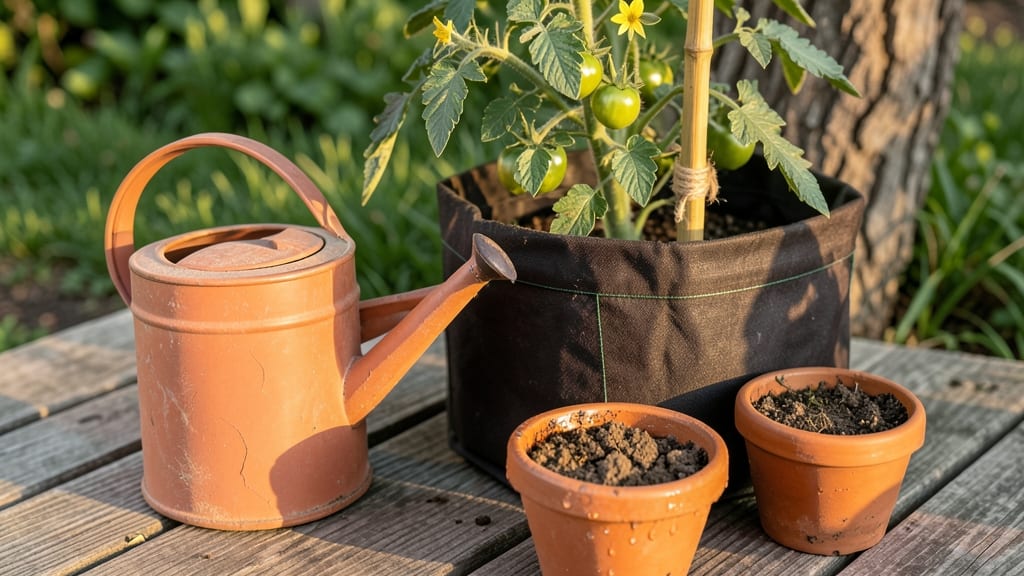
Watering potted tomato plants the right way keeps them thriving 🍅—but most gardeners either drown their roots or leave them thirsty, both of which stunt growth or invite pests.
If you’ve ever watched your tomato leaves curl at the edges or the soil stay soggy for days, you’re not alone. The key is matching your watering schedule to leaf size, pot depth, and the season—not just guessing.
In this guide, I’ll break down exactly how often to water based on your climate, whether your plants are in a 5-gallon pot or a 20-gallon container, and how to tell when the soil is dry enough for another drink.
You’ll learn the 3-rule system for summer heat, why winter watering slows to once a week, and how to spot the early signs of overwatering before it’s too late.
Watering frequency for potted tomatoes by leaf size and season
Potted tomato plants need consistent moisture, but leaf size and seasonal changes drastically alter your watering schedule. Small-leafed varieties like 'Tiny Tim' dry out faster than large-leafed 'Beefsteak' types, while summer heat demands daily watering in containers.
Let's break down the perfect routine to keep your plants thriving without drowning their roots.
First, consider your pot size—smaller pots (under 5 gallons) dry out in half the time of larger containers. A 5-gallon pot may need watering every 2-3 days in spring, while a 15-gallon container could last 4-5 days.
Always check soil moisture by sticking your finger 1-2 inches deep—if it's dry, it's time to water.
| Leaf Size | Pot Size | Spring (50-70°F) | Summer (75-95°F) | Fall (55-75°F) | Key Tips |
|---|---|---|---|---|---|
| Small ('Tiny Tim') | 5-10 gallons | Every 2 days | Daily (morning) | Every 3 days | Dries fastest; use self-watering pots |
| Medium ('Celebrity') | 10-15 gallons | Every 3 days | Every other day | Every 4 days | Balanced needs; mulch helps |
| Large ('Beefsteak') | 15+ gallons | Every 4 days | Every 2-3 days | Every 5 days | Retains moisture; avoid overwatering |
In spring, when temperatures hover between 50-70°F, most potted tomatoes thrive on every 2-4 days of watering. Focus on deep watering—aim for 1-1.5 gallons per watering session to encourage root growth.
Use your finger to check moisture at the soil-pot interface, where roots often struggle to access water.
Summer is the most critical season for potted tomatoes, especially in hot climates. Small-leafed varieties may need daily watering during heatwaves, while larger pots can stretch to every other day.
Always water in the early morning to reduce evaporation and fungal risks. If your leaves start curling or wilting, it's a sign to water immediately.
As fall temperatures drop (55-75°F), reduce watering frequency to every 3-5 days. Large-leafed tomatoes in 15+ gallon pots can go 5 days without water, but monitor soil moisture closely.
Overwatering in fall can lead to root rot, especially in cooler, damp conditions. Always ensure pots have drainage holes to prevent soggy soil.
Pro tip: Mulch your pots with 2-3 inches of straw or coco coir to retain moisture and regulate soil temperature. This simple step can reduce watering needs by 20-30% while keeping roots cool. Avoid organic mulches like wood chips, which can raise soil pH over time.
Watch for leaf color changes—yellowing leaves often signal overwatering, while crispy edges mean underwatering. Adjust your schedule based on these visual cues, and never let potted tomatoes sit in standing water. A well-draining soil mix with perlite or vermiculite is non-negotiable for container-growing success.
For indeterminate varieties (like 'Sungold'), which grow continuously, increase watering slightly during fruit set to support heavy vines. These plants may need 10-20% more water than determinate types. Always water at the base of the plant to avoid wetting leaves, which can attract blight diseases.
Remember: potted tomatoes can't regulate moisture like in-ground plants. Their roots are confined, so they rely entirely on you. Stick to this schedule, adjust for your local climate, and your container-grown tomatoes will reward you with juicy, flavor
Climate-specific watering adjustments for potted tomatoes
Your potted tomatoes thrive in different climates, but humidity, temperature, and rainfall drastically change their watering needs. In arid climates, soil dries faster, while tropical humidity can drown roots if you’re not careful.
Let’s break down how to adjust your watering schedule to match your local conditions—because a daily watering routine in Arizona won’t work in Florida.
First, understand that potted tomatoes need consistent moisture, but their pots dry out quicker than in-ground plants. In hot, dry climates, you might water twice daily, while cool, wet climates could require watering every 3-4 days.
The key is monitoring soil moisture, not sticking to a rigid schedule. Let’s dive into the specifics for each climate type to keep your plants lush and productive.
⚠️ Watering Warning for Potted Tomatoes
Overwatering is the #1 killer of potted tomatoes—especially in humid climates. Here’s how to avoid it:
- 💧 Arid climates: Water deeply every 1-2 days—soil should dry 2-3 inches deep between waterings.
- 🌧️ Temperate climates: Water every 2-3 days—check top 1 inch of soil for dryness.
- 🌴 Tropical climates: Water every 3-4 days—high humidity slows evaporation, but root rot is a risk.
Pro Tip: Use your finger to test soil moisture—if the top 1 inch feels dry, it’s time to water.
In arid climates (like Arizona or Nevada), high temperatures and low humidity mean your potted tomatoes lose moisture rapidly. Aim to water early in the morning to reduce evaporation and prevent fungal diseases.
Use a moisture meter or stick your finger 2-3 inches into the soil—if it’s dry, water until it drains from the bottom. In these conditions, self-watering pots or drip irrigation can be lifesavers.
For temperate climates (such as the Pacific Northwest or Midwest), your watering schedule can be more relaxed. Here, moderate rainfall and cooler temperatures mean you’ll water every 2-3 days during peak growing season.
Pay attention to leaf curl or yellowing, which can signal underwatering. In fall, reduce watering as daylight hours decrease, but keep soil lightly moist to support fruit ripening.
If you’re in a tropical or subtropical climate (like Florida or Hawaii), high humidity and frequent rain can trick you into thinking your plants need less water—but that’s not always true. These climates often require watering every 3-4 days, but root rot is a constant threat.
Ensure your pots have drainage holes and avoid letting plants sit in saucers of water. Mulch the soil surface to regulate moisture and reduce evaporation.
Regardless of your climate, always water at the base of the plant to avoid wetting leaves, which can lead to fungal diseases like early blight. And remember: container size matters. A 5-gallon pot will dry out faster than a 10-gallon pot, so adjust your schedule accordingly.
With these climate-specific tips, your potted tomatoes will stay hydrated, healthy, and productive all season long.