
Orchid Care
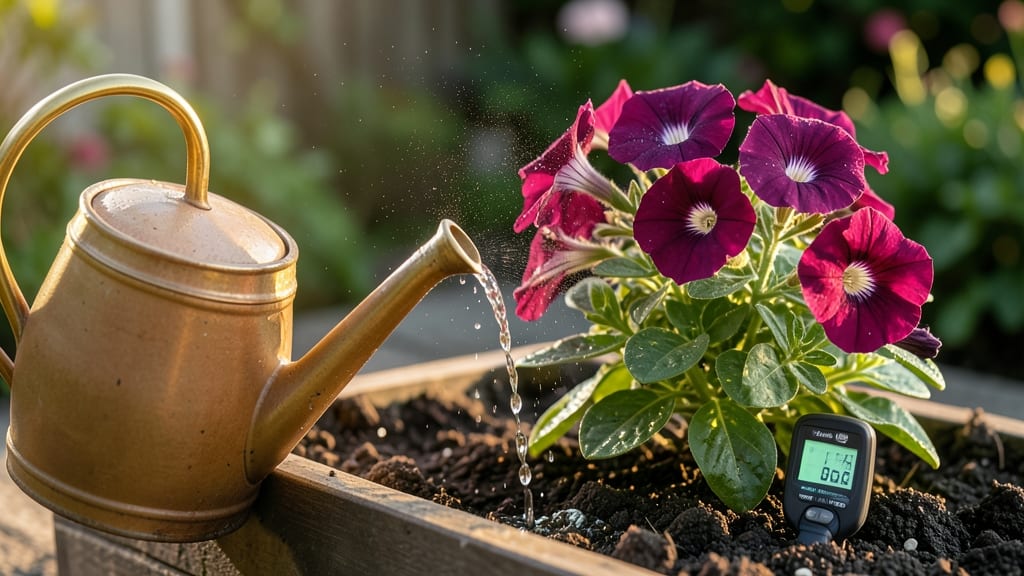
Watering petunias the right way means drenching their roots in the morning to fuel vibrant blooms all season—skipping this step is how you end up with droopy, half-hearted flowers by summer.
You’ve probably noticed petunias 🌸 wilting by afternoon or their leaves turning yellow, no matter how much you water. That’s not a drought problem—it’s a timing and technique issue.
When you water at the wrong time, the moisture evaporates before the roots can soak it up, leaving your plants thirsty and stressed.
Here’s the game-changer: a consistent morning routine keeps soil evenly moist without drowning roots, while a few simple adjustments for containers or heatwaves will save you from overwatering mistakes. Whether you’re growing them in garden beds or hanging baskets, these methods will transform your petunias into nonstop bloomers.
Below, I’ll walk you through the exact schedule, signs to watch for, and pro tips to keep your petunias thriving from spring until frost—no guesswork required.


Petunia watering schedule: why morning drenching maximizes blooms
If your petunias look wilted by midday or bloom less than expected, your watering routine might be the culprit. Petunias thrive on a morning watering schedule because it mimics their natural habitat—cool roots and reduced evaporation mean more energy for vibrant flowers instead of wilting.
The key isn’t just timing but also deep, consistent hydration that keeps soil evenly moist without drowning roots.
Science backs this up: watering in the morning (before 10 AM) allows foliage to dry completely by evening, preventing fungal diseases like powdery mildew. Plus, petunias in containers dry out faster than those in garden beds, so their needs differ dramatically.
Let’s break down the exact schedule based on your climate zone and growing setup.
Comparison Table: Petunia Watering by Climate Zone & Setup
| Climate Zone | Season | Garden Bed Frequency | Container Frequency | Watering Time | Key Tip |
|---|---|---|---|---|---|
| Zones 3-5 (Cool) | Spring/Fall | Every 3-4 days | Daily | Morning (7-9 AM) | Use mulch to retain moisture |
| Zones 6-8 (Moderate) | Summer | Daily (deep watering) | Every 12-24 hours | Morning (before 10 AM) | Avoid wetting leaves |
| Zones 9-11 (Hot) | Year-round | Every 2 days (deep) | Twice daily (morning/evening) | Early morning + late afternoon | Use drip irrigation for containers |
| All Zones | Winter | Bi-weekly (light) | Weekly (check soil) | Morning (if needed) | Reduce watering as temps drop |
For garden beds, aim to water until soil is 6 inches deep—this encourages roots to grow downward. Use a soaker hose or drip system to deliver water directly to the base without wetting leaves, which can cause powdery mildew.
In containers, petunias need more frequent watering because pots dry out quickly, but never let them sit in standing water—this leads to root rot.
Pro tip: Stick your finger 1 inch into the soil—if it feels dry, it’s time to water. For hanging baskets, lift them to check weight; if they feel light, they’re thirsty.
Adjust your schedule based on rainfall too—skip watering if you’ve had 1 inch of rain in the past 24 hours.
Morning watering isn’t just about timing—it’s about stress reduction. Petunias exposed to midday heat after watering can develop sunburnt leaves or closed blooms. By watering early, you give them time to photosynthesize and open fully for pollinators.
Plus, consistent moisture prevents the bud blast problem where flowers form but never open.
In hot climates (Zones 9-11), consider adding a 2-inch layer of mulch around your petunias to lock in moisture and keep roots cool. For cool climates (Zones 3-5), focus on deep watering every 3-4 days to prevent soil from becoming waterlogged.
Always water at the base of the plant, not overhead—this protects delicate petals from bacterial spots.
Watch for yellowing leaves, which often signals overwatering, or drooping foliage in the afternoon, a sign of thirst. Adjust your schedule based on these cues—petunias are forgiving but need consistency. With the right routine, your petunias will reward you with nonstop blooms from spring to frost.
Remember: Morning watering isn’t just a habit—
Signs of overwatering vs. underwatering petunias (and how to fix it)
Petunias are thirsty bloomers, but too much or too little water can turn your vibrant flowers into sad, droopy messes. The key is spotting the early warning signs—before it’s too late.
Overwatering and underwatering both cause yellow leaves, but the fixes couldn’t be more different. Let’s decode the clues your petunias are sending.
First, check the soil moisture with your finger. Stick it about 1 inch deep—if it feels damp, hold off on watering. If it’s bone-dry, your petunias are thirsty.
But here’s the catch: petunia roots need air almost as much as water. Soggy soil suffocates them, while dry soil shrinks their roots, cutting off nutrients. Balance is everything.
Pros:
- Cool roots prevent heat stress
- Prevents wilting in extreme heat
Pros:
- Encourages deep roots
- Prevents fungal diseases
Cons:
- Yellow leaves (lower first)
- Mushy stems (root rot)
- White mold on soil
Cons:
- Drooping leaves (even in morning)
- Crispy leaf edges
- Slow growth
Fix:
- Stop watering immediately
- Repot if root rot
- Improve drainage
Fix:
- Water deeply (1-2 inches)
- Mulch to retain moisture
- Water at base (not leaves)
If your petunias show yellow leaves with green veins, that’s classic overwatering. The roots can’t breathe, and the plant starts to rot from the bottom up. Check for mushy stems—if they feel soft, it’s a red flag.
The fix? Stop watering for a few days and let the soil dry out completely. For containers, consider adding perlite or sand to improve drainage.
On the flip side, underwatered petunias have crispy, brown edges and leaves that stay droopy all day, even after watering. The soil pulls away from the pot edges, and the roots shrink. Here, the solution is simple: water deeply until it runs out the drainage holes.
Then, add mulch around the base to lock in moisture. For hanging baskets, soak them in water for 10 minutes to revive thirsty roots.
Pro tip: Morning watering is your best friend. It gives roots time to drink up before the heat of the day, and leaves dry out faster, reducing fungal risks. If you must water in the evening, do it early—never after sunset.
And always water at the base of the plant, not the leaves, to avoid mildew. Your petunias will thank you with nonstop blooms all season.
🌸