
Flowers
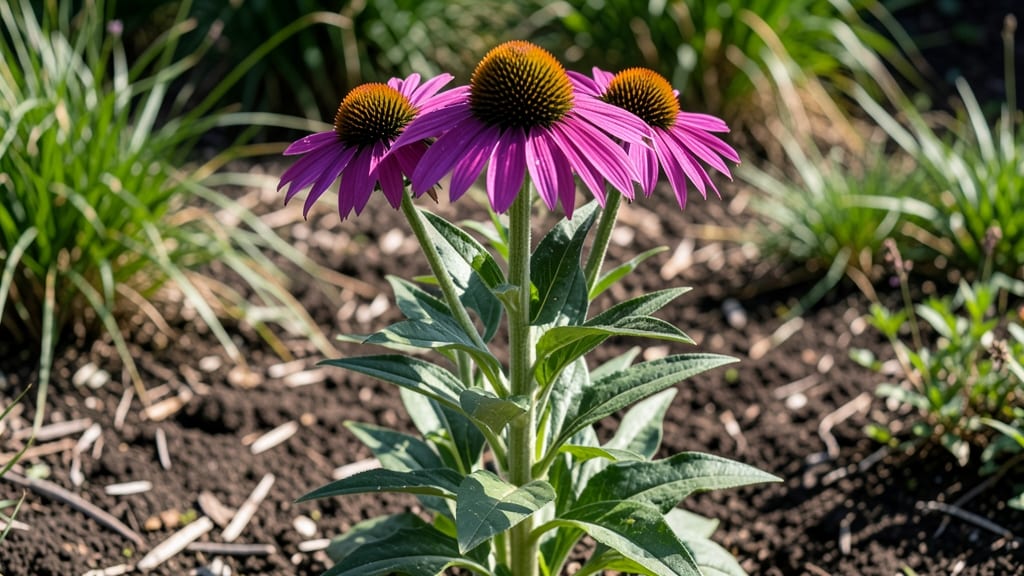
Yes, echinacea is a perennial plant that thrives year after year with minimal care, growing best in USDA hardiness zones 3-9. Its deep taproot system and winter hardiness allow it to regrow each spring, though some northern varieties benefit from protective mulching during harsh winters.
Echinacea's perennial nature comes from its robust root system, which stores nutrients underground during winter dormancy. 🌱 Unlike annuals that die back completely, echinacea's roots remain active beneath the soil, ready to push new growth when temperatures rise.
This makes it a low-maintenance choice for gardeners—once established, it typically requires only occasional division every few years to prevent overcrowding. The plant's natural resilience means you'll see those familiar purple blooms return season after season with proper sunlight and soil conditions.
What sets echinacea apart is its adaptability across different climates. In colder zones (3-5), a thick layer of mulch can provide that extra insulation, while varieties in warmer zones (7-9) may need afternoon shade during peak summer heat.
The key is understanding your specific microclimate—whether that means choosing a cold-hardy variety like 'White Swan' or a heat-tolerant type like 'Hot Papaya' for your region.
💡 In This Article
- Echinacea’s Natural Overwintering Adaptations
- Zone-Specific Echinacea Care for Year-Round Growth
Echinacea’s natural overwintering adaptations
Echinacea survives winter thanks to its specialized taproot system, which can extend 2-3 feet deep into the soil. This root structure acts like a natural storage unit, accumulating carbohydrates and nutrients during the growing season to fuel regrowth in spring.
Unlike annuals that rely solely on seeds or biennials with shallow roots, echinacea's deep roots insulate against freezing temperatures and tap into moisture reserves when surface soil dries out.
The plant enters a state of dormancy when temperatures drop below 40°F, halting above-ground growth while maintaining root activity. This process is triggered by shorter daylight hours and cooler temperatures—a survival mechanism shared with other hardy perennials like peonies.
The key difference is echinacea's ability to maintain 50-60% of its root biomass through winter, compared to annuals that shed all above-ground matter and rely entirely on seeds for renewal.
Cold tolerance varies by species: Echinacea purpurea (common purple coneflower) handles -20°F with ease, while Echinacea pallida (pale purple coneflower) can survive -30°F in ideal conditions. This hardiness explains why echinacea thrives in zones 3-9 without special protection, though extreme fluctuations (like sudden freezes) can stress younger plants.
The plant's waxy leaf coating also helps prevent ice crystal formation in cells during winter.
What most gardeners overlook is echinacea's regrowth timing, which begins when soil temperatures reach 45°F—earlier than many perennials. This early start gives it a competitive edge in the garden, allowing it to establish new foliage before competing weeds become established.
The trade-off? Its deep roots make transplanting challenging after establishment, as the root system can be damaged during relocation.
Comparing echinacea to annuals like marigolds reveals another advantage: perennials like echinacea develop secondary growth rings in their roots each year, increasing their diameter and storage capacity. This gradual thickening explains why mature echinacea plants (3+ years old) are far more resilient than their younger counterparts.
The plant's natural defense mechanisms make it a true workhorse in the perennial garden.
For those wondering about flowering consistency, here's the science: Echinacea stores flower buds in its roots during winter, ready to bloom as soon as conditions permit.
This means even after a harsh winter, you'll typically see flowers within 6-8 weeks of new growth appearing—a testament to its efficient overwintering strategy. 🌿