
Watering
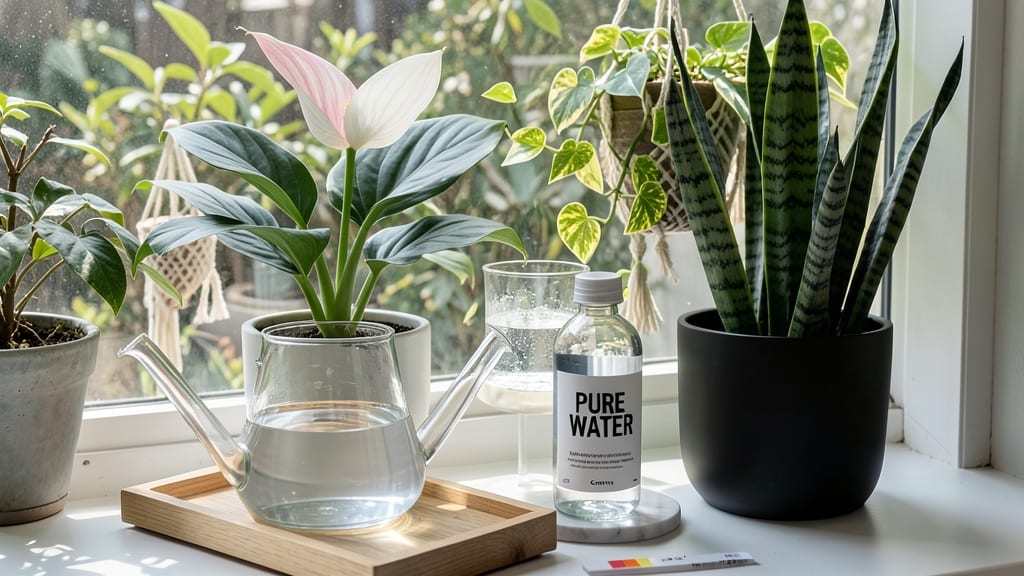
Filtered water can be good for plants if it’s remineralized, as it lacks essential minerals like calcium and magnesium that support root and cell health. Tap or rainwater is often safer for most houseplants and gardens without extra steps.
Using filtered water for plants isn't inherently bad—it just requires extra attention to mineral balance.
Many modern filters strip out calcium and magnesium, which are crucial for strong cell walls and nutrient absorption. 🌱 Without these, plants may show stunted growth or yellowing leaves, especially in container gardens where soil can't replenish minerals quickly.
I've seen houseplants thrive on remineralized filtered water, but for vegetables and flowers, tap or rainwater often works better naturally.
For those committed to filtered water, adding a pinch of Epsom salt (magnesium sulfate) or crushed eggshells (calcium) to the soil can make a big difference. The key is monitoring your plants' health—if leaves start curling or edges turn brown, it's a sign they're craving those missing minerals.
And remember, some plants, like succulents, actually prefer softer water, so it's all about matching your water type to your garden's needs.
💡 In This Article
- How Mineral Content Affects Plant Growth
- Best Water Choices for Different Plants
How mineral content affects plant growth
Plants rely on minerals like calcium and magnesium to build strong cell walls and transport nutrients efficiently. Calcium, for example, helps form pectin—a structural compound that keeps cell walls rigid. Without enough calcium, plants develop "blossom end rot" in tomatoes or mushy stems in houseplants.
Magnesium, found in chlorophyll, powers photosynthesis, so deficiencies show up as yellowing between leaf veins. 🌿 Filtered water often strips these minerals, leaving plants malnourished despite adequate moisture.
Tap water usually contains 30-100 ppm of calcium and 10-50 ppm of magnesium, while rainwater has near-zero levels. Even distilled water lacks these essentials entirely. The problem isn't just absence—it's imbalance.
Too little calcium causes weak roots, while excess sodium (common in softened water) can block nutrient uptake. This is why remineralization matters: adding back minerals restores the natural chemistry plants expect.
Here's what happens without proper minerals: roots struggle to absorb water, leaves develop brown edges (a classic calcium deficiency sign), and growth slows. I've seen ferns wilt dramatically when switched to unremineralized filtered water, yet revive within weeks after adding Epsom salt.
The solution isn't just about minerals—it's about recreating the balanced mineral profile plants evolved to use.
For container gardens, this becomes critical because soil can't replenish minerals like outdoor beds can. A 1-inch layer of crushed eggshells provides calcium, while 1 teaspoon of Epsom salt per gallon of water adds magnesium.
The key is consistency—just like humans need daily vitamins, plants need ongoing mineral access. 💧 This is why many hydroponic systems include mineral supplements.
Even pH balance matters. Magnesium helps buffer soil acidity, while calcium prevents soil from becoming too alkaline. Without these, your water's pH can swing wildly, stressing roots. Most plants prefer a neutral pH of 6.0-7.0, but without proper minerals, even "perfect" pH water fails to nourish properly.
Consider this: a tomato plant needs 160 ppm calcium for healthy fruit development. If your filtered water provides only 10 ppm, you're missing 94% of what's needed. That's why remineralization isn't optional—it's essential for mineral-deficient water systems.