
Planting
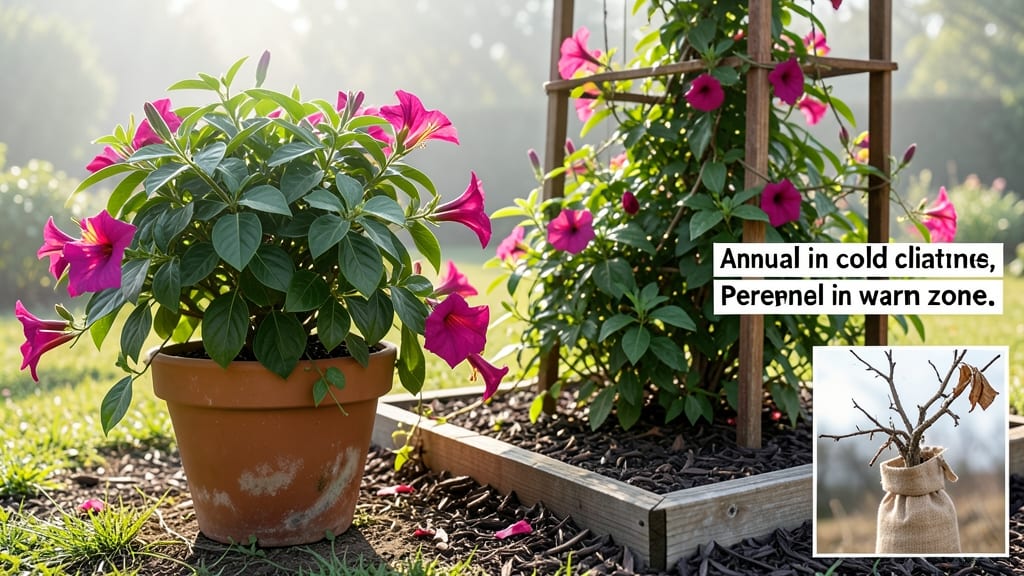
Your Mandevilla thrives as a perennial in frost-free zones but gets treated like an annual where winters drop below 30°F. 🌺 I’ve grown them in both climates—once as a showstopper that died back to the roots, and once as a container plant that bloomed nonstop for three summers.
The difference? Knowing when to protect them or start fresh each spring.
In warm climates (Zones 9-11), Mandevillas naturally return year after year with minimal care—just prune back in early spring and watch them rebound. But in colder areas, they’re tender perennials: they’ll die in frost but can be dug up and overwintered indoors or treated as annuals for seasonal color.
The key is matching your climate to the plant’s needs.
What you’ll discover is how adaptable they really are. With the right winter strategy—whether that’s bringing pots inside or cutting back to the ground—they deliver bold, trumpet-shaped blooms from late spring through fall. Even in containers, they’ll climb trellises or spill over edges, creating a tropical vibe that lasts months.
Here’s the game-changer: in colder zones, you can still grow them as annuals and still get three seasons of blooms—just plant them after the last frost and enjoy them until frost returns. The trade-off? You’ll replant each year, but the payoff is effortless, eye-catching beauty that rivals perennials.
📚 In This Guide
- What you need
- Instructions
- Tips and common mistakes
- Wrapping up and next steps
What you need
- ● Mandevilla plants: 1–3 healthy nursery-grown plants (choose varieties like Mandevilla sanderi or Mandevilla boliviensis for vibrant colors).
- ● Potting soil: 5–10 gallons of well-draining, peat-based potting mix (amend with perlite or orchid bark for aeration).
- ● Containers (if potted): 1–3 large containers (12–18 inches in diameter) with drainage holes.
- ● Fertilizer: Balanced liquid fertilizer (10-10-10 or 20-20-20), 1 gallon per plant (diluted to half-strength).
- ○ Slow-release granules (optional, for long-term growth).
- ● Mulch: 2–3 inches of organic mulch (e.g., pine bark or shredded leaves) to retain moisture.
- ● Pruning shears: Sharp, clean pair for shaping and maintenance.
- ● Watering can or hose: With a gentle spray nozzle for hydration.
- ● Sunlight gauge: A tool or app to track 4–6 hours of morning sun (critical for perennials!).
- ● Cold-hardy zone protection: Burlap wrap or frost cloth (for zones 9–11 during light frosts).
- ● Indoor overwintering space (e.g., garage or sunroom with grow lights).
- ● Heat shields: Shade cloth (30–50%) for intense afternoon sun in hot climates.
- ○ Root stimulator: Optional (e.g., mycorrhizal fungi) to boost perennial survival.
- ● 🔥 Test your soil: Aim for a pH of 6.0–7.0 (use a kit if unsure).
- ● ✨ Container hack: Add coffee grounds to soil for extra nutrients (Mandevillas love acidity!).
- ● 🎯 Perennial prep: Before winter, reduce watering to harden off plants for overwintering.
How to decide: is mandevilla annual or perennial for your climate?
Here's the simple truth: whether mandevilla thrives as annual or perennial depends on your zone and a few key tricks.
🌱 Step 1: Check Your Hardiness Zone First
Mandevilla is a tropical beauty that won't survive frost—period. In zones 9-11, it's a perennial that grows year-round with proper winter care. In colder zones (3-8), treat it as an annual and enjoy it as a summer showstopper. Check your zone on the USDA map before buying plants.
If you're in zone 9 or warmer, you can push the limits by protecting plants with frost cloth or moving them to a garage during freezes. I've kept mine alive through 28°F with these methods, but don't expect miracles below 25°F.
☀️ Step 2: Choose the Right Variety for Your Climate
Some mandevilla varieties handle cooler temps better than others. Mandevilla 'Alice DuPont' and 'Amabilis' are the hardiest, tolerating brief dips to 30°F with protection. For zones 3-8, stick with these varieties—their thicker stems recover better from cold snaps.
If you're in zone 9-10, you can experiment with 'Summer Skies' or 'Pink Velour' for extra vibrant blooms. These varieties need consistent warmth to thrive, so don't expect them to survive unprotected freezes even in mild winters.
🪴 Step 3: Prepare for Winter in Marginal Zones
In zones 8-9, where winters dip below freezing occasionally, take these steps to overwinter mandevilla: Cut back stems to 6 inches, repot into a smaller container, and store in a cool, dark place (50-60°F) with minimal water. Check soil monthly—it should stay slightly moist but never soggy.
Here's the thing—many gardeners give up too soon. I've revived mandevilla plants that were completely leafless after winter storage by giving them bright light and warmth in spring. Watch for new growth at the stem base—that's your signal it's still alive.
✂️ Step 4: Master the Annual Growing Cycle
For zones 3-8, treat mandevilla as annuals by planting after your last frost date (usually mid-May). Choose a sunny, sheltered spot with well-draining soil—these plants hate soggy roots. Water deeply once a week once established, letting the top 1-2 inches of soil dry between waterings.
Deadhead spent blooms regularly to encourage more flowers. You'll see a second flush of blooms if you keep up with this. In fall, when temperatures drop below 50°F at night, the plant will decline. Don't waste time trying to save it—just enjoy the show while it lasts.
🌿 Step 5: Extend the Season with Containers
Containers give you flexibility to move mandevilla indoors before frost or back outside when temps warm. Use 10-15 gallon pots with fast-draining mix (equal parts potting soil, perlite, and compost). Place pots in full sun until late summer, then move to bright indirect light indoors.
This is where people mess up: they don't adjust watering when bringing plants inside. Cut back to every 10-14 days once indoors—overwatering is the #1 killer of container-grown mandevilla. Watch for yellowing leaves as your signal to reduce watering.
Tips & tricks for year-round mandevilla success
Don't let your climate dictate your mandevilla dreams—these tricks will help you maximize blooms no matter where you live.
Zone-Specific Variety Selection: The hardiest varieties like 'Alice DuPont' and 'Amabilis' are your best bet for cooler climates (zones 3-8). These thicker-stemmed varieties can tolerate brief dips to 30°F with protection, while more delicate varieties like 'Summer Skies' need consistent warmth above 50°F to thrive. I've had success pushing 'Alice DuPont' to 28°F with frost cloth, but don't expect miracles below 25°F—even the toughest varieties have limits.
Winter Storage Secrets: In zones 8-9 where winters occasionally dip below freezing, the key to overwintering is creating the right conditions: 50-60°F and minimal water. I've revived plants that looked completely dead by giving them bright light and warmth in spring. Pro tip: Check for new growth at the stem base—this is your signal the plant is still alive, even if it's completely leafless. Patience is key here; don't give up too soon!
Container Flexibility: Containers are your secret weapon for extending the season. Use 10-15 gallon pots with fast-draining mix (equal parts potting soil, perlite, and compost) to give your mandevilla the flexibility to move indoors before frost. The biggest mistake people make is not adjusting watering when bringing plants inside—cut back to every 10-14 days once indoors. Watch for yellowing leaves as your signal to reduce watering further. This adjustment prevents the #1 killer of container-grown mandevilla: overwatering.
Pro Tips for Mandevilla Annual Or Perennial
- Don't let your climate dictate your mandevilla dreams—these tricks will help you maximize blooms no matter where you live.
- Zone-Specific Variety Selection: The hardiest varieties like 'Alice DuPont' and 'Amabilis' are your best bet for cooler climates (zones 3-8).
- Winter Storage Secrets: In zones 8-9 where winters occasionally dip below freezing, the key to overwintering is creating the right conditions: 50-60°F and minimal water.
Frequently asked questions
Got questions about keeping your mandevilla blooming year after year? We’ve got answers!
Whether you’re a first-time gardener or a seasoned plant parent, these FAQs will help you navigate the annual vs. perennial debate and troubleshoot common challenges. Let’s dive in!
Is mandevilla a true perennial, or does it die back every year?
Mandevilla is semi-perennial in most climates—it thrives as an annual in cold zones (USDA 9-11) but can be overwintered indoors or as a houseplant. In frost-free areas, it may persist for years with proper care. Prune it back in late winter to encourage new growth!
How do I overwinter mandevilla indoors?
Move potted mandevillas inside before temps drop below 40°F (4°C). Place them in bright, indirect light (like a sunroom) and reduce watering. Prune leggy stems in early spring to prep for regrowth. Pro tip: Mist leaves occasionally to combat dry indoor air!
Can I grow mandevilla in containers year-round?
Yes! Containers offer flexibility—just use well-draining soil and a pot with drainage holes. In cold climates, bring pots indoors or wrap them in frost cloth. For tropical vibes, pair mandevilla with other heat-loving plants like bougainvillea or hibiscus.
Why aren’t my mandevilla leaves blooming?
Lack of blooms often stems from overwatering, low light, or nutrient deficiency. Ensure it gets 6+ hours of sun, prune spent flowers, and fertilize monthly with a balanced bloom booster. Yellow leaves? Check for root rot or pests like spider mites.
Are there cold-hardy mandevilla alternatives?
If your zone is too chilly for mandevilla, try Catharanthus (periwinkle) or Abelia—both tolerate cooler temps and offer year-round color. For tropical flair, Plumbago is another drought-resistant option that blooms reliably in zones 8-11.
Quick Troubleshooting Table
| Issue | Likely Cause | Fix |
|---|---|---|
| Wilting leaves | Over/under-watering | Check soil moisture; adjust watering schedule |
| No flowers | Too much shade or fertilizer | Move to sun; reduce fertilizer to half-strength |
| Brown tips | Low humidity or pests | Mist leaves or treat with neem oil |
Wrapping up and next steps
So, is Mandevilla annual or perennial? The answer depends on your climate! In cooler zones, treat it as an annual—bring it indoors or dig up tubers to overwinter.
But in warmer regions, it thrives as a perennial, gracing your garden year after year with its stunning blooms. 🌸
Now that you’re armed with the secrets, give your Mandevilla the love it deserves—whether that’s winter care or year-round pampering. Ready to transform your space? Start planting (or repotting!) today and enjoy the vibrant rewards!