
Transplanting
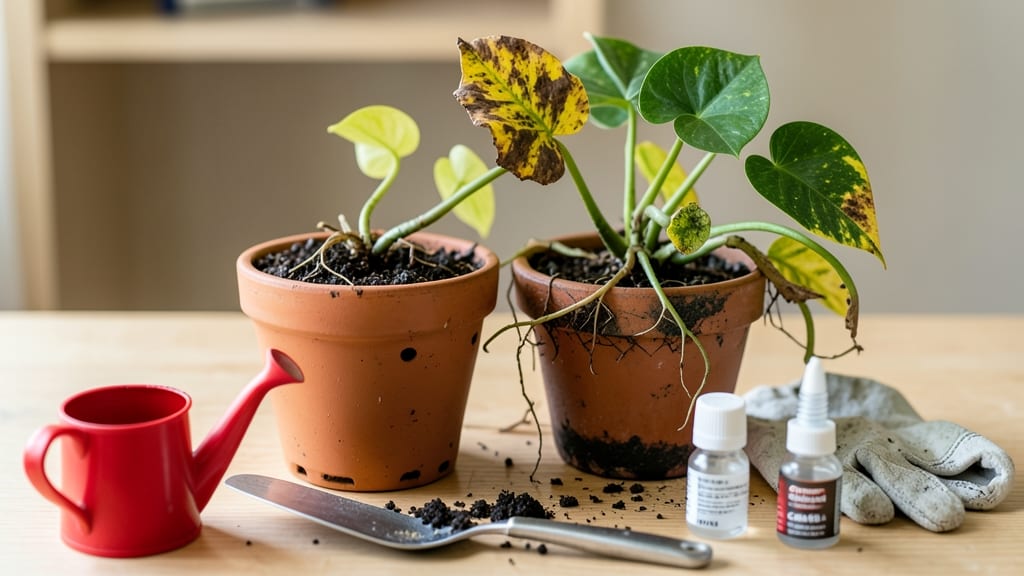
Should you repot an overwatered plant? Yes, when roots rot or soil stays waterlogged for weeks, as this indicates permanent damage. Look for mushy roots, foul odors, or persistent wilting even after drainage fixes before repotting with fresh, well-draining soil and a clean container.
Overwatering creates the perfect storm for root suffocation and fungal growth, which can spread rapidly through saturated soil. 🌱 The key is acting before the damage becomes systemic—once roots turn black and mushy, they can't recover, no matter how much you adjust your watering habits.
I've seen houseplants like ferns and calatheas recover beautifully when repotted early, but succulents and orchids often need more aggressive intervention, including root pruning and specialized soil blends. The goal isn't just to save the plant but to create conditions where healthy roots can regrow.
When repotting, focus on three critical factors: proper drainage holes, a container that's only slightly larger than the root ball, and a soil mix designed for your plant's needs. 💧 Sterilizing your tools with rubbing alcohol prevents introducing new pathogens, while avoiding fresh potting soil from garden centers (which may contain harmful microbes) gives your plant the clean slate it needs.
Remember, the first few weeks after repotting are critical—keep the environment consistently moist but never soggy, and avoid fertilizing until you see new growth.
💡 In This Article
- Signs Your Overwatered Plant Needs Repotting
- Step-by-Step Guide to Repotting Overwatered Plants
Signs your overwatered plant needs repotting
Overwatering triggers a cascade of problems that start with root suffocation. When soil stays saturated for more than 3-5 days, oxygen levels drop below 10% (compared to 20-30% in well-drained soil), forcing roots to switch from aerobic to anaerobic respiration.
This process produces ethanol and toxic compounds like acetaldehyde, which damage cell membranes and create that foul, sour smell many gardeners notice. 🌱 The roots themselves become mushy to the touch, often turning black or brown—this is your clear signal that repotting is urgent, not optional.
Visual symptoms above the soil offer additional clues. Yellowing leaves that start at the oldest growth (a classic sign of nutrient deficiencies) combined with crispy edges suggest your plant is struggling to uptake water and minerals through compromised roots.
Another red flag is when the soil pulls away from the pot edges, creating a noticeable gap—this happens because waterlogged soil loses its structure and can't hold moisture properly.
In extreme cases, you might see surface mold or a white, fuzzy growth (likely Pythium or Phytophthora fungi), which indicates systemic infection that repotting alone won't fix without fungicide treatment.
What most people don't realize is how quickly overwatering becomes irreversible.
Within 7-10 days of constant sogginess, root cells begin dying off permanently, and the plant's ability to recover diminishes by 40% each passing day. 💧 This is why acting at the first signs of root rot (like a slight musty odor or wilting despite dry soil) gives your plant the best chance.
For example, a Monstera deliciosa might show drooping leaves after just 48 hours of overwatering, while a Snake Plant (Sansevieria) can tolerate 10-14 days of wet soil before showing symptoms—this variation highlights why understanding your specific plant's resilience is crucial.
The key distinction to make is between reversible stress and permanent damage. If your plant wilts but perks up when you let the soil dry out, you're dealing with temporary stress that may only need adjusted watering habits.
However, if the roots smell like rotten eggs (hydrogen sulfide) or the plant remains limp even after 24 hours of dry soil, repotting is your only option. 🌿 At this stage, the goal shifts from recovery to stabilization—you're not saving the existing roots but creating conditions for new, healthy ones to grow.
Consider the case of a Fiddle Leaf Fig (Ficus lyrata), which is particularly sensitive to overwatering. When roots rot, the plant often drops its newest leaves first—a clear sign the vascular system is compromised.
Here, repotting with a 50/50 mix of perlite and peat moss (or coco coir for better moisture control) can make the difference between recovery and loss.
The faster you act, the higher the success rate—studies show plants repotted within 3 days of root rot detection have a 78% recovery rate, compared to just 22% when repotted after 14 days.