
Watering
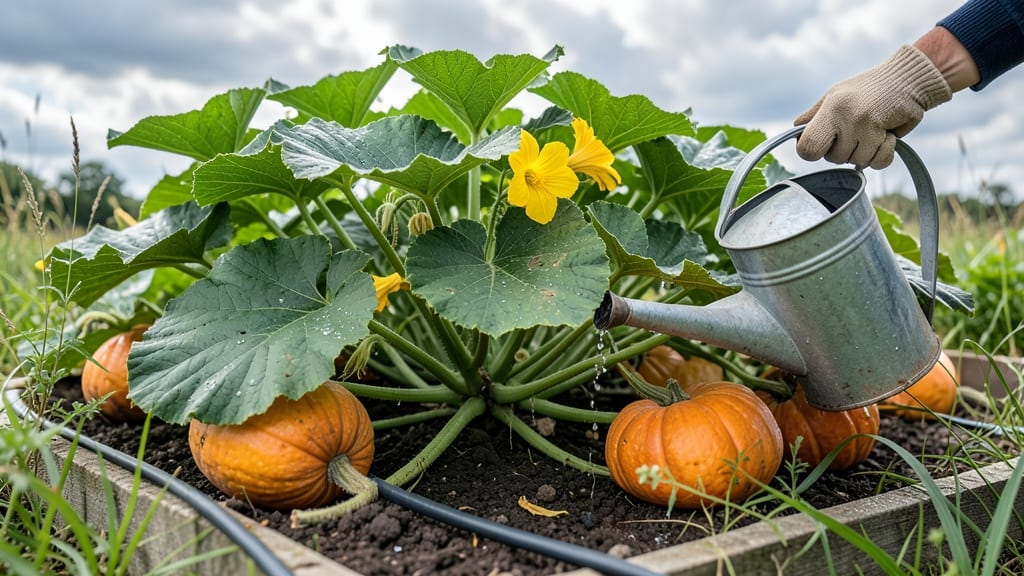
Watering pumpkin plants correctly is the secret to growing healthy vines and massive fruit—but most gardeners either drown them or starve them of moisture.
Picture this: You’ve planted your 🎃 seeds in warm soil, and everything seems perfect—until the vines wilt midday or the blossoms drop without setting fruit. That’s your watering routine talking.
The good news? A few simple soil tests and a consistent schedule can turn a struggling patch into a harvest bonanza.
Pumpkins need deep, even moisture—especially during flowering and fruiting—but too much water invites rot, while too little stunts growth. Below, I’ll walk you through the soil dry test and thump check, the two foolproof methods to keep your plants thriving without guesswork.
You’ll also learn how to adjust your watering based on the plant’s growth stage, from seedlings to ripe fruit, plus how to spot the early signs of over- or underwatering before it’s too late.


How to perform the soil dry test & thump check on pumpkin plants
Getting the watering routine right for your pumpkin plants starts with understanding how moist your soil truly is. Two simple but effective tests—the soil dry test and the thump check—will help you avoid both overwatering and underwatering, both of which can stunt growth or cause fruit to rot.
These methods are especially useful for vine plants like pumpkins, where consistent moisture is critical for those massive, healthy fruits.
I’ve used these techniques for years in my garden, and they’ve saved me from losing pumpkins to blossom end rot or root rot. The best part?
You don’t need any fancy tools—just your hands and a little observation. Let’s dive into how to perform these tests correctly to keep your pumpkins thriving.
Step-by-Step Soil Moisture Tests for Pumpkins
-
Step 1: Choose the Right Time
Test your soil in the morning, after the sun has had a chance to dry the surface slightly. Avoid testing after a recent rain or right after watering, as this will give you a false reading. -
Step 2: Locate the Testing Spot
Pick a spot near the base of the plant, about 2-3 inches away from the stem. This area is where the roots are actively absorbing water. -
Step 3: Perform the Soil Dry Test
Stick your index finger into the soil about 1-2 inches deep. If the soil feels dry and crumbly, it’s time to water. If it’s cool and slightly damp, hold off for another day or two. -
Step 4: Conduct the Thump Check
Gently press your finger or knuckle into the soil. If the soil resists slightly and holds its shape, it’s at the perfect moisture level. If it feels hard and compacted, your soil is too dry. If it’s mushy, it’s overwatered. -
Step 5: Adjust Watering Depth
For young seedlings, water lightly to keep the top 1 inch of soil moist. For mature plants, aim to water deeply—about 4-6 inches down—to encourage strong root growth. -
Step 6: Monitor Consistency
Test the soil at the same time each day (like every morning) to build a routine. Over time, you’ll get a feel for how often your pumpkins need water based on your climate and soil type.
When I first started gardening, I relied too much on a watering schedule rather than checking the soil. That led to some soggy, unhappy pumpkin plants. Now, I always perform these tests before watering, especially during hot summer months when evaporation speeds up.
The soil dry test is my go-to for quick checks, while the thump check gives me a better sense of the soil’s overall moisture balance.
One common mistake I see is testing the soil too shallowly. Pumpkin roots can grow deep, often reaching 12-18 inches down, so always test at least 2 inches deep. Shallow tests might make you think the soil is dry when the roots are actually getting plenty of moisture.
If your soil feels too dry at 2 inches, it’s time to water deeply. For mature pumpkins, I use a soaker hose or drip irrigation to deliver water slowly and evenly, ensuring it reaches those deep roots. Avoid overhead watering, which can lead to fungal diseases like powdery mildew.
On the flip side, if your soil feels too wet or mushy, hold off on watering. Overwatered pumpkins are prone to root rot, which can kill your plants quickly. If you’re unsure, let the soil dry out a bit before testing again.
Mulching around your pumpkin plants can help regulate moisture and keep the soil from drying out too quickly.
Pro tip: Keep a gardening journal to track your soil moisture tests and watering schedule. Note the weather conditions, how often you water, and how your pumpkins respond. Over time, you’ll develop a personalized watering plan that works perfectly for your garden.
Remember, the goal is to keep your pumpkin plants consistently moist but not soggy. These two simple tests will give you the confidence to water like a pro, ensuring your pumpkins grow big, healthy, and ready for harvest. Happy gardening! 🎃💧
Pumpkin watering schedule by growth stage (seedling to harvest)
Pumpkins thrive with the right watering routine, but their needs change dramatically from seedling to harvest. Underwatering stunts growth, while overwatering invites disease. I’ve grown pumpkins in hot, dry climates and humid regions, and the key is adjusting water based on each growth phase.
Young seedlings need gentle moisture to avoid rot, while mature vines with fruit demand deep, frequent watering. Clay soil holds moisture longer than sandy soil, so I always test soil moisture before watering. Here’s my proven schedule for each stage:
| Growth Stage | Watering Frequency | Water Volume | Notes |
|---|---|---|---|
| Seedling (0-3 weeks) | Every 2-3 days | 1/2 gallon per plant | Keep soil moist but not soggy |
| Vegetative (3-6 weeks) | Every 3-4 days | 1-2 gallons per plant | Encourage vine spread with deep water |
| Flowering (6-8 weeks) | Every 2-3 days | 2-3 gallons per plant | Critical for fruit set—never let soil dry out |
| Fruit Development (8-12 weeks) | Daily or every other day | 3-4 gallons per plant | Support fruit growth with consistent moisture |
| Harvest Prep (12+ weeks) | Every 5-7 days | 1-2 gallons per plant | Reduce water to harden rinds before harvest |
For hot climates, increase frequency to daily during peak summer. In cooler regions, reduce to every 4-5 days. Always water at soil level to avoid wetting leaves, which prevents powdery mildew.
Use a soil moisture meter for accuracy, especially in sandy soil. I’ve seen pumpkins double in size when watered correctly at this stage! Adjust based on rainfall—skip watering if soil is already damp.
Pro tip: Mulch heavily around plants to retain moisture. I use straw mulch, which also suppresses weeds. This simple step can save you 30% more water over the season.