
Plants
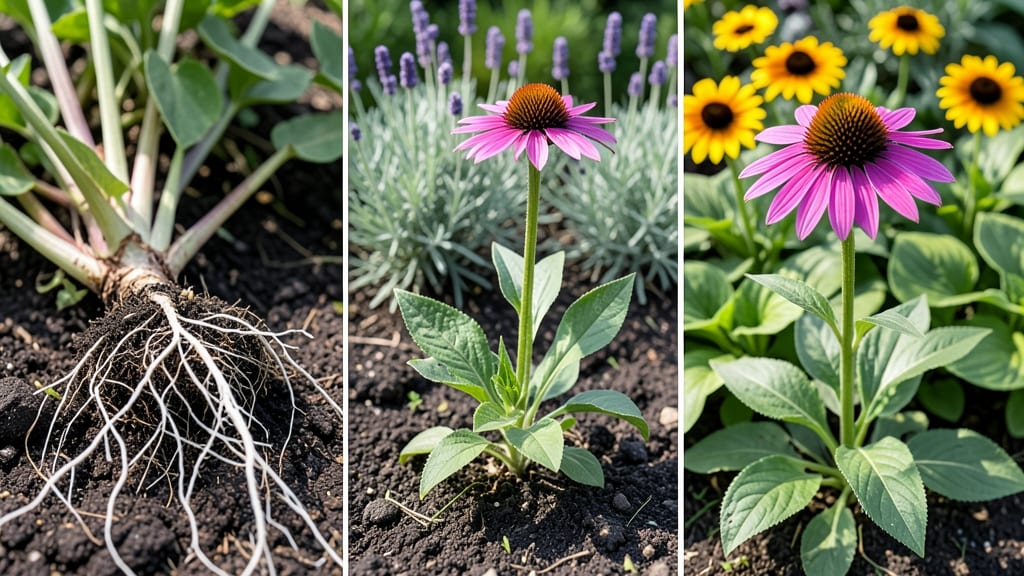
Perennials are plants that return year after year from their root systems, blooming seasonally while enduring cold, drought, or heat through underground storage. Unlike annuals, they don't die after one growing season, making them ideal for low-maintenance gardens.
These hardy plants thrive because their roots store energy and nutrients underground during harsh seasons, allowing them to push new growth when conditions improve. 🌱 For example, peonies and lavender can live for decades with minimal care, while hostas and coneflowers adapt to various climates.
The trade-off? Some perennials require more patience upfront—they may take 2-3 years to reach full bloom but reward you with years of color and structure.
Unlike annuals that complete their lifecycle in one season, perennials develop deep root systems that anchor them in place while conserving moisture. This makes them perfect for slopes or areas prone to erosion.
Plus, their returning blooms mean fewer purchases over time—once established, many perennials need only occasional division or pruning to stay healthy.
💡 In This Article
- How Perennial Plants Survive Through Seasons
- Best Perennial Plants for Beginners and Seasonal Gardens
How perennial plants survive through seasons
Perennials endure through seasons thanks to specialized root systems that store nutrients and energy underground. Unlike annuals, which complete their entire lifecycle in one growing season, perennials develop deep, fibrous roots that can extend 3-5 feet below the surface.
These roots act like natural batteries, storing starches and sugars produced during photosynthesis. For example, daylilies store energy in thick rhizomes, while peonies use tuberous roots—both can survive winters with temperatures as low as -20°F.
The key to their survival is dormancy—a state where growth slows or stops during harsh conditions. In winter, perennials like coneflowers and black-eyed Susans enter a metabolic slowdown, reducing water loss and energy consumption.
Some even produce antifreeze proteins that protect their cells from freezing. 🌿 During dormancy, their roots continue respiring at minimal levels, using stored nutrients to maintain essential functions until spring. This adaptation contrasts sharply with annuals, which die back completely after seeding.
Seasonal adaptations also include leaf strategies. Many perennials, such as hostas and asters, produce new leaves each spring from buds located at the base of the plant (called basal buds).
These buds are often protected by thick, waxy coatings or buried just below the soil surface, shielding them from temperature extremes. Even in drought-prone regions, perennials like sedum and yarrow have succulent leaves that store moisture, allowing them to survive with minimal water during dry spells.
Light exposure plays a critical role too. Some perennials, like bleeding hearts, thrive in partial shade, while others, such as blanket flowers, prefer full sun. Their ability to adjust growth patterns based on light availability ensures they can regenerate each season.
For instance, in short-day conditions (like winter), many perennials shift resources from leaf production to root expansion, preparing for the next growing cycle.
Consider the case of lavender—a perennial that not only survives but thrives in poor, well-drained soil. Its woody stems and aromatic leaves contain oils that act as natural preservatives, reducing water loss and deterring pests.
This hardiness is why lavender can live for decades with minimal care, unlike annuals that must be replanted every year. 🌸 The trade-off? Perennials often take 2-3 years to establish fully, but their long-term resilience makes them worth the wait.
One fascinating exception is biennials, which bridge the gap between annuals and perennials. Plants like foxgloves or hollyhocks grow leaves in their first year, flower in their second, and then die. This two-year cycle highlights how perennials' multi-year strategy is a specialized adaptation for stability in fluctuating environments.