
Plants
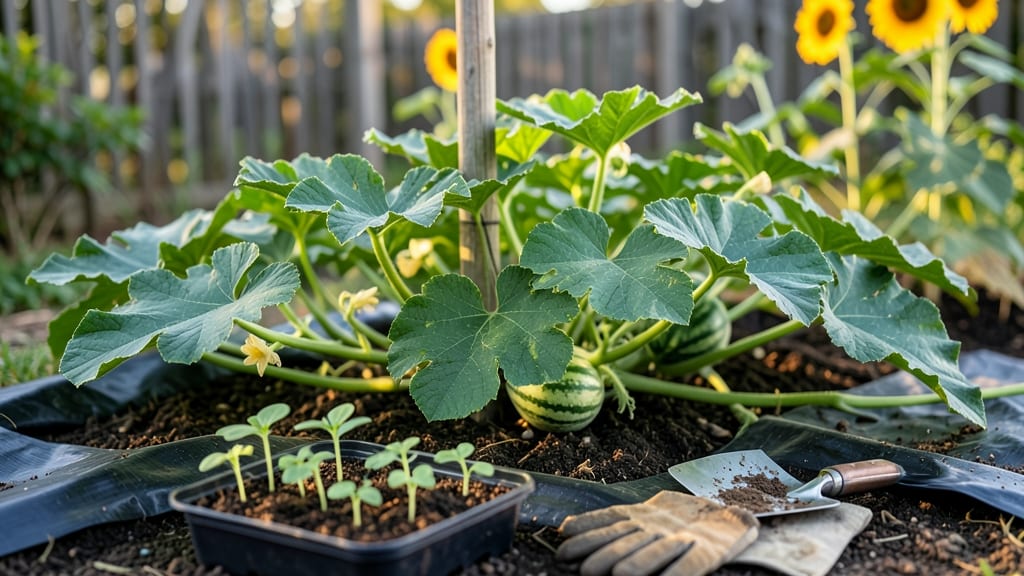
Plant watermelon in Alabama after your last frost date—typically mid-April to early May—when soil temperatures hit at least 70°F and vines can stretch out without fear of cold snaps.
Miss that window, and you’re staring at withered seedlings or a harvest that never comes. Alabama’s long, humid summers give watermelons (🍉) plenty of time to thrive, but the clock starts the moment the ground warms.
Below, I break down the exact frost-free dates by USDA zone (7b–8b), soil prep tricks to prevent rot, and how to tell when your melons are ready to ripen—plus the one mistake that kills more Alabama watermelon crops than anything else.
Ready to grow? You’ll learn how to time your planting for maximum yield, from transplanting seedlings to spacing vines for that perfect, juicy slice.
Alabama watermelon planting dates by USDA Zone: frost-free timelines & heat tolerance
Alabama’s USDA zones 7a–8b offer perfect conditions for growing watermelons, but the key to success lies in timing. Since watermelons thrive in warm soil (75°F+) and can’t handle frost, planting too early risks damage while late planting cuts your harvest window short.
Here’s how to align your planting schedule with Alabama’s frost-free timelines for maximum yield.
Most Alabama gardeners aim to plant watermelons after the last frost date, which typically falls between mid-March (Zone 7a) and early March (Zone 8b). However, soil temperature is more critical than air temperature—watermelon seeds won’t germinate well in cold soil.
Always wait until the soil reaches at least 70°F before planting, which usually aligns with mid-April to early May across the state.
Direct sowing is the preferred method for watermelons, but you can also start seeds indoors 4–6 weeks before the last frost to get a head start. Transplant seedlings outdoors only after hardening them off and when nighttime temperatures consistently stay above 55°F. This approach is especially useful for gardeners in Zone 7a, where cooler springs delay planting.
For gardeners in Zone 7a, where springs can be unpredictable, consider using black plastic mulch to warm the soil faster. Lay the mulch down 2–3 weeks before planting to create a microclimate that speeds up germination.
In Zones 8a–8b, you can push the envelope slightly by planting early-maturing varieties like ‘Sugar Baby’ or ‘Crimson Sweet’ as early as late March if soil temperatures cooperate.
If you miss the ideal window, don’t despair—watermelons can still thrive if planted by early June. While this shortens your harvest window, it’s better than nothing! Just choose fast-maturing varieties (60–70 days) like ‘Black Diamond’ or ‘Jubilee’ to ensure a crop before Alabama’s first frost in late November.
Avoid planting after mid-July, as the vines may not have enough time to establish and produce fruit before cooler weather sets in.
Pro tip: Use a soil thermometer to monitor temperatures before planting. Watermelon seeds need consistent warmth to germinate—aim for 80–90°F for the best results. If your soil is still cool, delay planting or use a seedling heat mat to give seeds a boost.
Patience here pays off with stronger, healthier plants ready to take advantage of Alabama’s long, hot summers.
Adjust your planting schedule based on microclimates in your area. Spots near buildings, fences, or bodies of water can warm up faster, allowing for earlier planting. Conversely, low-lying areas or shady spots may stay cooler longer, so avoid planting there until soil temperatures rise.
Always observe your local weather patterns—some years, Alabama’s spring arrives early, while others drag on longer than expected.
Once you’ve planted, give your watermelons plenty of space to vine (6–10 feet per plant) and full sun (6–10 hours daily). In Alabama’s heat, consistent deep watering (1–2 inches per week) is crucial, especially during flowering and fruiting.
With the right timing and care, you’ll be slicing into homegrown watermelons by July or August, just in time for summer’s peak!
Soil preparation & pre-planting tricks to boost Alabama watermelon yields
Alabama’s humid climate and heavy rainfall demand specialized soil prep to prevent watermelon rot and boost yields. Start by testing your soil pH—watermelons thrive in 6.0 to 6.8 range. If your soil is too acidic, mix in lime; for alkaline soil, add sulfur or peat moss.
This adjustment ensures nutrients like nitrogen and potassium are available for vigorous vine growth.
Next, enrich your soil with organic matter like compost or aged manure. Work in 2-3 inches of compost into the top 12 inches of soil. This improves water retention and aeration, which is critical in Alabama’s clay-heavy soils.
For sandy soils, add coco coir or well-rotted leaves to help retain moisture.
🌱 Alabama Watermelon Soil Prep Checklist
- ☑️ Test pH (aim for 6.0–6.8)
- ☑️ Amend with compost (2–3 inches)
- ☑️ Fix drainage (raise beds if needed)
- ☑️ Add mulch (straw or black plastic)
- ☑️ Space seeds (1–2 inches apart)
Drainage is another critical factor in Alabama’s rainy season. Watermelons hate soggy roots, so raise beds or create mounds if your soil stays waterlogged. For in-ground planting, till in sand or perlite to improve drainage.
If your garden floods after heavy rains, consider raised beds or container growing for better control.
Mulching is a game-changer for Alabama watermelons. Apply 2–3 inches of straw or black plastic mulch after planting to suppress weeds, retain moisture, and keep fruits off the damp soil.
Black plastic also warms the soil faster, speeding up germination. Just remember to leave space around the stem to prevent rot from trapped moisture.
Finally, add a balanced fertilizer like 10-10-10 at planting time to give your watermelons a nutrient boost. Avoid over-fertilizing with nitrogen—it promotes leafy growth at the expense of fruit.
Instead, focus on phosphorus and potassium to encourage strong roots and sweet fruit development. Side-dress with compost mid-season if vines look weak.
With these soil prep tricks, your Alabama watermelons will have the perfect foundation for a bountiful harvest. Don’t skip the pH test—it’s the secret to avoiding common problems like blossom-end rot or stunted growth. Happy planting! 🌱