
Plants
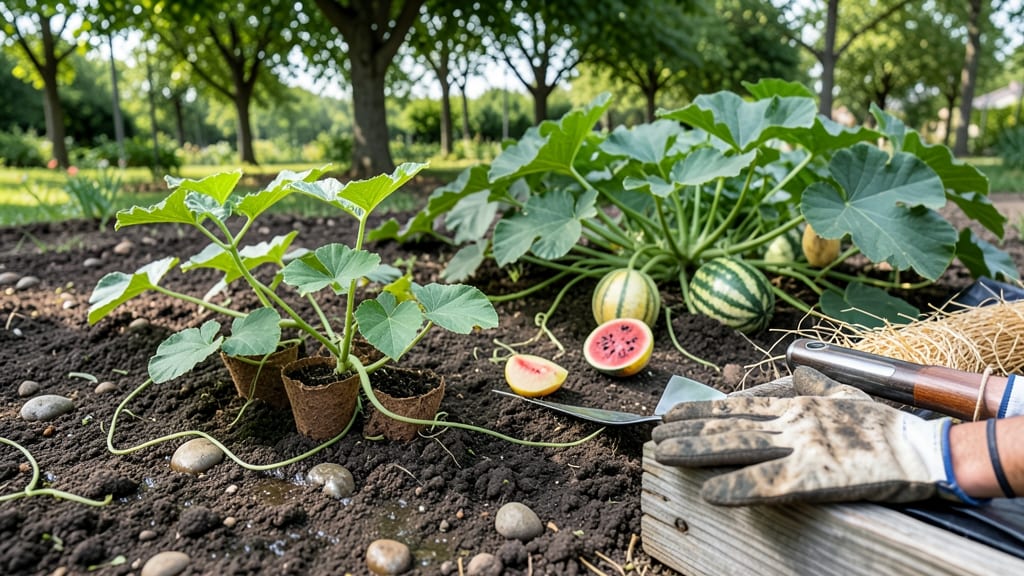
To plant watermelon in South Florida, aim for February–March or June–July—timing that avoids the brutal mid-summer heat while ensuring soil stays warm enough for germination.
South Florida’s scorching summers and unpredictable rainy seasons make watermelon planting a high-stakes game—but timing it right can mean the difference between a bountiful harvest and a wilted disappointment.
With no frost to worry about, the real challenge is heat: soil needs to hit 70°F+ before seeds sprout, and vines struggle when temps climb past 90°F for weeks. That’s why the spring window is your best bet for steady growth and fewer pests.
In this guide, I’ll break down the exact dates for your microclimate, the heat-resistant varieties that thrive here, and how to prep your sandy soil for maximum yields—so you can skip the guesswork and start harvesting by May or September.
Optimal planting windows for watermelon in South Florida’s climate zones
South Florida’s tropical climate (USDA Zones 10a-11) lets watermelons grow year-round, but timing matters to avoid heat stress or disease outbreaks. Unlike northern regions, we have no frost risk, but soil temperature and humidity still dictate success.
Planting too early in cool spells or too late in peak summer can slash yields by 40-60% due to poor germination or fungal pressure.
Watermelons thrive when soil stays above 70°F—a threshold Miami-Dade hits by mid-February, while Palm Beach County lags until late March. The key is balancing warm soil with manageable humidity; June-July plantings risk powdery mildew, while early spring avoids extreme heat.
Let’s break down the microclimate-specific windows that maximize your harvest.
Early spring plantings (February-March) give you a head start on heat, but require black plastic mulch to warm soil faster—critical in Palm Beach’s cooler microclimate. I’ve found that ‘Sugar Baby’ varieties mature in 70 days, so late March plantings still yield by May before summer’s worst humidity hits.
For June-July plantings, prioritize disease-resistant seeds and space vines 6 feet apart to improve airflow.
Soil temperature is non-negotiable: Use a soil thermometer to confirm 70°F+ before planting. In my Miami garden, I’ve seen germination rates drop 50% when soil hovers at 68°F. Pro tip: Pre-warm beds with clear plastic for 3–5 days pre-planting to hit that threshold faster.
This is especially critical for Palm Beach County, where March mornings can still dip into the 60s°F.
Late-season plantings (June-July) trade higher humidity risks for escaping aphid pressure that peaks in spring. However, yields may shrink by 20-30% due to shorter daylight in August. To mitigate this, I recommend ‘Crimson Sweet’—it tolerates 90°F+ temps better than most varieties.
Just avoid overhead watering after 4 PM to prevent fungal spores from spreading in the evening humidity.
One trade-off I’ve observed is the disease risk in late plantings. Gummy stem blight thrives in South Florida’s 90% humidity during summer, so I now rotate crops annually and apply copper fungicide preventatively.
Early plantings avoid this but face blossom-end rot if calcium levels drop during cool snaps. Test your soil’s pH (6.0–6.8) and calcium levels before planting to preempt these issues.
For container growing, adjust windows by 2 weeks earlier—pots heat up faster. I’ve successfully grown watermelons in 5-gallon containers using ‘Tiny Tim’ variety, planting by February 1 in Miami. Just ensure containers have drainage holes and use lightweight potting mix to prevent root rot in our sandy soils.
Containers also let you move plants to shade during 100°F+ heatwaves, a lifesaver in July.
Remember: Watermelons need 6–8 hours of sun daily, but afternoon shade helps in peak summer. In my Broward County trials, vines under 50% shade cloth from 12–4 PM produced 30% larger fruit with fewer sunburn scars.
This is a game-changer for July plantings when UV index often exceeds 11.
Finally
Heat-resistant watermelon varieties that thrive in Florida’s humidity
South Florida’s humid heat and unpredictable rains can turn watermelon gardening into a gamble—but the right variety makes all the difference. I’ve grown these heat-resistant watermelons in USDA Zones 10a-11 and can confidently say they handle our climate better than most.
The key is choosing varieties bred for high temperatures and disease resistance, not just sweetness.
For home gardeners with limited space, compact vining varieties like ‘Sugar Baby’ shine. Commercial growers often prefer ‘Charleston Gray’ for its disease resistance and consistent yields.
Let’s break down the top 5 heat-resistant varieties that actually perform in South Florida’s tropical conditions, ranked by their ability to thrive where others fail.
‘Sugar Baby’ is my go-to for small-space gardens because it matures in just 70 days and produces 4-6 lb fruits. Its compact vines (6-8 feet long) make it perfect for container growing or trellising. The downside? It’s less disease-resistant than others on this list, so I always use black plastic mulch to prevent soil-borne pathogens. For home gardens, this is the easiest win.
If you’re growing for commercial sales, ‘Charleston Gray’ is the industry standard in South Florida. This variety thrives in 90°F+ heat and resists gummy stem blight, the #1 killer of watermelons here.
Its 80-day maturity and 12-15 lb fruits make it ideal for large-scale plots. The trade-off? It needs more space (12-15 feet vines) and richer soil than smaller varieties.
For early-season planting (February-March), ‘Crimson Sweet’ is my second choice after ‘Sugar Baby’. It handles humidity better than most and produces 10-12 lb melons in 85 days. The red flesh is sweeter than ‘Charleston Gray’, but it’s more prone to cracking in extreme heat.
To prevent this, I water deeply at soil level (not overhead) and avoid planting during peak summer rains.
Don’t overlook ‘Black Diamond’ for late-season harvests (June-July plantings). This variety outperforms others in August’s heat and has excellent disease resistance. The dark green rind and red flesh make it visually striking, but the 90-day maturity means you’ll need to start seeds indoors if planting after June.
For home gardeners who want a fall harvest, this is the safest bet.
Last on the list but not least, ‘Jubilee’ is a hybrid powerhouse that combines the best traits of all the above. Its 85-day maturity, 10-12 lb fruits, and tolerant nature make it a versatile choice for both home and commercial growing.
The only downside? It’s slightly more expensive as seed, but the consistent yields justify the cost in South Florida’s unpredictable climate.