
Watering
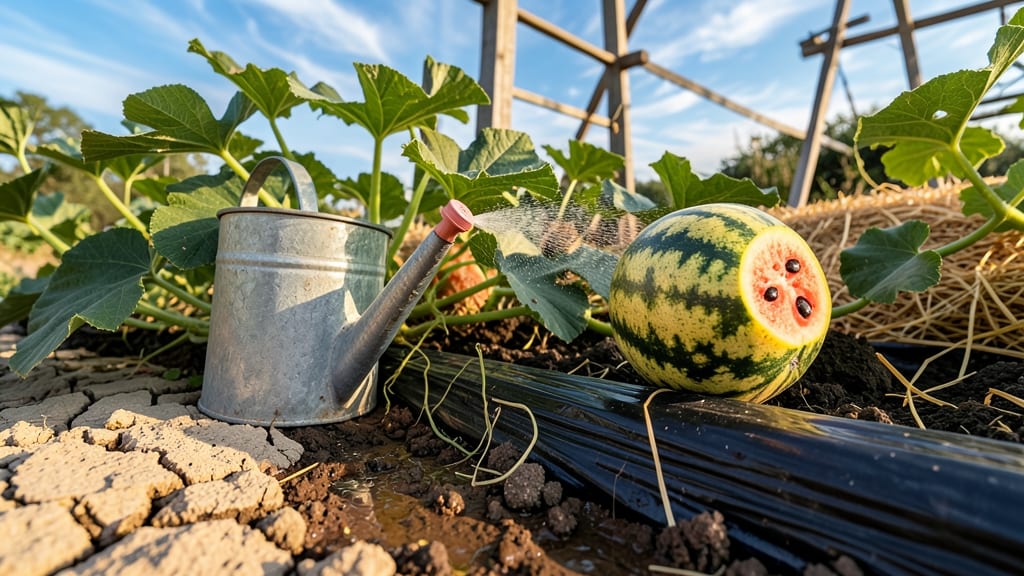
Stop watering watermelon when the soil is dry to 2 inches deep and the fruit is nearly ripe 🍉 — cutting back too soon dilutes flavor, but waiting too long risks cracking.
Overwatering your watermelon plants can turn your sweet harvest into a waterlogged disaster—here’s exactly when to pull back on the hose for maximum flavor and yield.
Think you’re doing it right? Many gardeners drown their plants right up until harvest, only to end up with bland, split fruit. The secret lies in reading the soil and the plant’s signals.
In this guide, I’ll show you the 3-step soil test to know when to stop watering, how to adjust for heatwaves, and why reducing water boosts sugar in your melons.


The 3-Step soil dry test to know when to stop watering watermelons
Watermelons thrive with consistent moisture, but overwatering in the final stages can dilute their sugar content and cause fruit splitting. The key is knowing exactly when to reduce watering—typically 1-2 weeks before harvest. My foolproof soil dry test combines three simple checks to guide you.
Start by observing your watermelon vines and fruit development. Healthy vines should look vigorous but not waterlogged, while fruits should reach 70-80% of their final size. This is your cue to begin testing soil moisture. The goal? Let the roots signal when they’ve had enough water.
-
Step 1: The Finger Test (1-2 Inches Deep)
Push your index finger 1-2 inches into the soil near the vine base. If it feels dry and crumbly, it’s time to water. If it’s damp or sticky, hold off for 1-2 days.
-
Step 2: The Trowel Check (3-4 Inches Deep)
Use a small trowel to dig 3-4 inches deep in the root zone. If the soil clumps together when squeezed but doesn’t drip water, your watermelons are ready for a light watering. If it’s bone dry, water immediately.
-
Step 3: Visual Soil Cues
Look for fine cracks (not deep fissures) in the soil surface. These indicate the top layer is dry, but moisture remains 2-3 inches below. Pair this with wilted leaves that perk up in the morning—a sign the plant is thirsty but not desperate.
Timing matters most during the final 2 weeks before harvest. At this stage, reduce watering by 30-50% to let the fruit concentrate sugars. Think of it like baking a cake—less water means richer flavor. I’ve seen watermelons go from bland to bursting with sweetness just by adjusting watering.
Watch for visual ripening cues like a creamy yellow patch near the stem or a dry, brown stem. These signs often appear when your soil tests show moderate dryness.
If you’re unsure, tap the fruit—hard, hollow-sounding melons are ready, while soft ones need more time (and less water).
Adjust your watering schedule based on weather patterns. Hot, dry days? Test soil daily. Humid or rainy? Extend the time between tests. I once overwatered my crop during a heatwave, leading to splitting fruits.
Since then, I’ve made it a rule to water deeply but infrequently once the soil passes the dry test.
Mulch plays a crucial role in regulating moisture. Apply a 2-3 inch layer of straw or wood chips around the base of your plants to slow evaporation and keep roots in the ideal moderately dry zone.
This simple step reduces the need for frequent watering and helps you stick to the soil dry test more easily.
If you’re growing watermelons in containers, the rules change slightly. Smaller pots dry out faster, so check soil moisture every 2-3 days. Use your finger to test just below the top inch—if it’s dry, water until it drains freely from the bottom.
Container-grown melons also benefit from drip irrigation to deliver water directly to the roots.
Remember, the goal isn’t to let the soil completely dry out, but to create controlled moisture stress in the final stages. This stress triggers the plant to redirect energy toward sweetening the fruit.
I’ve found that morning watering (before 10 AM) gives the soil time to dry slightly during the day, making it easier to pass the dry test by evening.
When in doubt, observe your plants. Healthy watermelon leaves should be deep green and slightly wrinkled (not drooping). If they’re yellowing or wilting, you’ve gone too far. The soil dry test, combined with these visual cues, will help you balance moisture perfectly for the sweetest harvest. 🍉
Critical growth stages where watering must stop for sweet watermelons
Watermelons need consistent moisture early on, but knowing when to stop watering is just as crucial for sweetness. The key is understanding three critical growth stages where reducing water triggers natural sugar concentration. This process transforms bland fruit into the juicy, sweet harvest you crave.
First, focus on the flowering stage (about 3-4 weeks after planting). During this phase, watermelons need steady moisture to support fruit set, but you can begin tapering off slightly. The goal is to encourage strong root development without overburdening the plant with excess water.
Next comes the fruit development phase, typically 4-6 weeks after flowering. This is where most gardeners make the mistake of keeping water levels high. Instead, reduce watering to 50% of normal amounts to prevent fruit from becoming waterlogged and diluting natural sugars.
The final stage is final ripening, which begins about 2 weeks before harvest. This is when you should stop watering entirely unless the soil becomes extremely dry. The stress of reduced moisture triggers the plant to concentrate sugars in the fruit, resulting in sweeter, more flavorful watermelons.
Watch for overwatering signs like yellowing leaves, soft stems, or fruit that splits at the blossom end. These are clear indicators you've pushed too far.
Adjust your watering schedule based on your local climate—hotter regions may need slightly more moisture during early stages, but always taper off as harvest nears.
Remember, the goal isn't to dry out your plants completely, but to create a balanced stress that enhances sweetness. With this approach, you'll enjoy watermelons that are naturally sweeter and more flavorful than store-bought varieties. 🍉