
Companion Plants
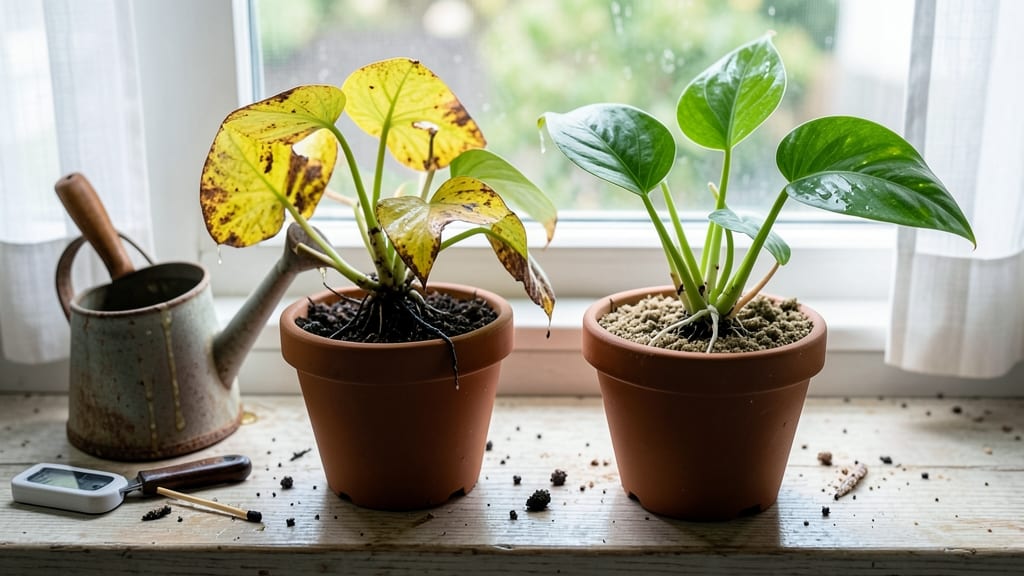
To know if you overwatered a plant, look for yellowing leaves, soft or mushy stems, and a sour soil smell, while examining roots shows dark, mushy areas instead of healthy white or tan roots. Correct the issue immediately to save the plant.
Overwatering often starts with subtle signs that many gardeners miss. 🌱 The most obvious clue is leaves turning yellow—especially if they start at the bottom and spread upward—while the soil stays damp for days.
This happens because roots deprived of oxygen can't absorb nutrients, leading to wilting even when the soil feels wet. I've seen beginners overcorrect by watering more, which only speeds up root rot.
The key is to check soil moisture with your finger before watering—if the top inch feels damp, wait a few more days.
Another critical test is the root inspection. Healthy roots should be firm with a white or light tan color, while overwatered roots turn dark brown or black and smell foul. If you find this, trim the damaged parts with clean scissors and repot in fresh, well-draining soil.
Many container plants recover quickly once you adjust their care routine—just remember that most plants prefer slightly dry soil between waterings rather than constantly moist conditions.
💡 In This Article
- Signs of Overwatered Plants: Leaf and Soil Clues
- How to Fix Overwatered Plants: Recovery Steps
Signs of overwatered plants: leaf and soil clues
When plants suffer from too much water, their leaves send clear distress signals that reveal what's happening underground. The most common visual clue is yellowing leaves that start at the base and spread upward—a process called chlorosis.
This occurs because oxygen deprivation in waterlogged soil prevents roots from absorbing essential nutrients like nitrogen, which causes chlorophyll breakdown. 🌿 Unlike nutrient deficiencies that show specific patterns (like yellowing between veins), overwatering causes uniform yellowing across entire leaves while the veins may stay green.
The texture of leaves also changes dramatically. Overwatered foliage often feels soft or mushy to the touch, almost like overripe fruit, while the stems may develop a spongy consistency when squeezed. This happens because excess moisture creates anaerobic conditions where harmful bacteria and fungi thrive, breaking down plant cell walls.
A foul, sour smell from the soil is another red flag—this indicates microbial activity from decomposing organic matter in waterlogged conditions. Even plants like ferns or calatheas, which naturally prefer moisture, will show these signs if their roots stay submerged for too long.
What often confuses gardeners is that overwatered plants may still appear wilted despite wet soil. This happens because oxygen-starved roots can't take up water efficiently, causing the plant to dehydrate internally even when the soil looks damp.
The wilting is different from underwatering—it's accompanied by heavy, soggy soil that doesn't dry out between waterings. 💧 This is why the "finger test" works so well: if the top inch of soil feels damp after 24 hours, you're likely overwatering.
Root health provides the most definitive diagnosis. Healthy roots should be firm with a white or light tan color, while overwatered roots turn dark brown or black and smell like rotting fruit. The damage starts at the tips where oxygen levels drop first, then spreads inward.
What's fascinating is that some plants like succulents show root rot symptoms within 2-3 days of overwatering, while others like ferns may take 2 weeks to show visible signs—this is why regular root checks are crucial for container plants.
Soil composition plays a surprising role in these symptoms. Plants in heavy clay soils show overwatering signs faster because water drains poorly, while those in sandy mixes may appear fine until you check the roots.
This is why amending your soil with 20-30% perlite or compost can make a huge difference in preventing overwatering damage. The key is matching your watering schedule to your soil's drainage characteristics—something that takes practice but saves countless plants.
One advanced clue is leaf drop that happens suddenly rather than gradually. When roots can't support the plant's needs, leaves may detach completely within 24-48 hours of severe overwatering.
This is different from natural leaf shedding which occurs over weeks. 🌱 Pay attention to how quickly symptoms appear—rapid changes usually indicate more severe oxygen deprivation in the roots.